
Snacks
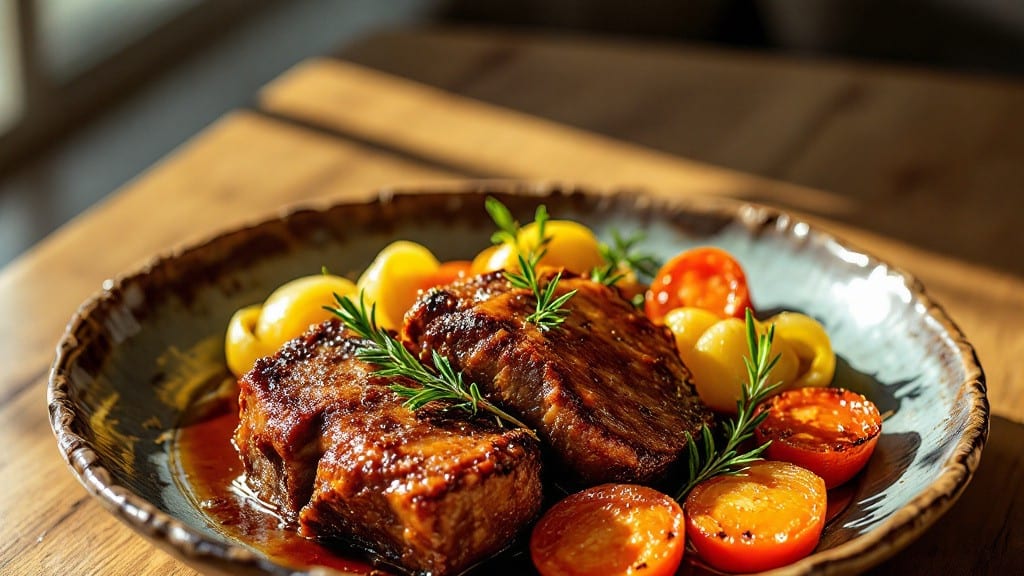
Mastering this roasted oxtail recipe transforms tough cuts into melt-in-your-mouth tenderness with a caramelized glaze that locks in deep umami flavors. The secret lies in parboiling first—this critical step removes impurities and jumpstarts collagen breakdown, ensuring fork-tender meat by roasting time.
I developed this method after years of testing, balancing traditional braising techniques with modern efficiency for home kitchens.
What sets this recipe apart is the dual-stage cooking process: an initial high-heat sear develops a rich crust, while slow roasting at 325°F for 3 hours renders fat into a golden glaze.
The result isn't just flavorful—it's restaurant-quality without requiring a Dutch oven. Every bite delivers that signature oxtail experience: velvety texture, intense beefy richness, and a glossy finish from reduced cooking juices.
The caramelized glaze forms naturally as the oxtail roasts, creating pockets of concentrated flavor that elevate each forkful. This method preserves moisture while developing complex depth—no added sauces needed. Serve with crusty bread to soak up the glaze or pair with roasted root vegetables for a complete meal.
The technique is precise but forgiving, making it accessible for home cooks while delivering professional results.
For those with time constraints, a sous-vide prep step before roasting ensures even tenderness without monitoring. The recipe scales beautifully for gatherings, and leftovers reheat perfectly. Whether you're preparing for a special occasion or weeknight dinner, this roasted oxtail delivers the depth and satisfaction of traditional techniques with modern convenience.
Ingredients for roasted oxtail
Transform tough oxtail into velvety perfection with these essential ingredients.
| Ingredient | Amount | Notes |
|---|---|---|
| Oxtail 🥩 | 2 ½ lb | Bone-in, cut into 2-inch pieces |
| Yellow Onion 🧅 | 1 whole | Cut into 1-inch chunks |
| Carrot 🥕 | 2 whole | Cut into 1-inch chunks |
| Fresh Thyme 🌿 | ¼ oz | Or 1 tbsp dried thyme |
| Fresh Rosemary 🌿 | ¼ oz | Or 1 tbsp dried rosemary |
| Garlic Cloves 🧄 | 6 cloves | Smashed, not minced |
| Extra-Virgin Olive Oil 🫒 | 2 tbsp | For initial sear |
| Unsalted Butter 🧈 | 2 tbsp | Full-fat for richness |
| Diamond Crystal Kosher Salt 🧂 | 1 ½ tsp | For seasoning |
| Ground Black Pepper 🌶️ | 1 tsp | Freshly cracked |
| Low-Sodium Beef Broth 💧 | 1 cup | For parboiling |
| All-Purpose Flour 🌾 | 1 tbsp | For thickening glaze |
| Balsamic Vinegar 🍷 | 1 tbsp | For finishing glaze |
The oxtail selection is critical—look for cuts with good marbling and minimal bone exposure. Local butchers often carry superior quality compared to grocery store options, though the meat department at Whole Foods consistently delivers reliable results. Bone-in pieces are ideal for maximum flavor extraction, and cutting them into uniform 2-inch chunks ensures even cooking. Fresh herbs like thyme and rosemary should be vibrant and fragrant; Trader Joe's bulk herb section offers excellent quality at reasonable prices. The beef broth should be low-sodium to prevent over-salting during the parboiling stage—Kirkland Signature or Pacific Foods brands are excellent choices.
Substitutions can be made thoughtfully without compromising quality. If fresh thyme or rosemary isn't available, dried herbs at one-third the quantity work well, though the flavor will be slightly less pronounced. For the beef broth, homemade vegetable broth can substitute 1:1, but it may lack the umami depth. The balsamic vinegar adds complexity to the glaze—aged balsamic from Costco provides superior flavor compared to standard supermarket varieties. When cutting the vegetables, larger chunks create more surface area for caramelization, enhancing the dish's depth of flavor. The olive oil should be extra-virgin for its fruity notes that complement the beef's richness.
Proper storage extends this dish's shelf life significantly. The raw oxtail should be refrigerated in an airtight container and used within 2 days for optimal texture. Fresh herbs can be wrapped in damp paper towels and stored in a sealed container for up to 5 days. The finished roasted oxtail reheats beautifully—simply cover with foil and warm in a 350°F oven for 15-20 minutes. For longer storage, portion into airtight containers and freeze for up to 3 months. The caramelized glaze can be preserved separately and reheated with a splash of water for serving.
Why You'll Love This Recipe
- Hands-Off Roast: That oxtail practically cooks itself—just toss the chunks on a sheet pan with onions, carrots, and herbs, then let the oven do the work. No flipping, no fussing, just set-and-forget magic while you sip wine or fold laundry.
- Herb-Caramel Magic: The thyme and rosemary cling to the oxtail like a cozy blanket, while the onions and carrots caramelize into sticky, sweet pockets. Honestly, the first bite makes me close my eyes—it’s that good.
- Leftovers for Days: Roasted oxtail tastes even better the next day, especially shredded into tacos or tossed with rice. I’ll be real: I’ve eaten it cold straight from the fridge, and it’s still my kind of meal.
- Budget Feast: A single oxtail feeds four (or two very hungry people) for way less than steak. The bones add depth, the meat stays tender, and you’re left with a dish that feels special without the restaurant price tag.
Step-by-step instructions for roasted oxtail with caramelized glaze
Master the art of transforming tough oxtail into melt-in-your-mouth richness using precise technique and time-tested methods.
Parboil the Oxtail for Maximum Tenderization
Place the 2.5 lb oxtail in a large stockpot and cover with cold water by 2 inches. Bring to a boil over high heat, then immediately reduce to a simmer. Cook for exactly 20 minutes—this partial cooking breaks down collagen and prevents toughness while maintaining structure. You'll see the oxtail pieces float to the surface when done.
Drain the oxtail thoroughly in a colander, shaking vigorously to remove all excess moisture. This step is critical—wet oxtail won't develop that signature caramelized crust. While draining, prepare your aromatics by dicing the 1 whole yellow onion and 2 whole carrots into 1-inch chunks, and smashing the 6 garlic cloves with the flat side of your knife.
Sear the Oxtail for Deep Flavor Development
Heat a large oven-safe skillet over medium-high heat until hot. Add the 2 tbsp extra-virgin olive oil and swirl to coat. Working in batches if needed, add the oxtail pieces and sear undisturbed for 3-4 minutes per side until deeply browned with a crust forming. This Maillard reaction creates complex flavors that infuse throughout the cooking process.
Remove the seared oxtail and set aside. In the same skillet, add the 2 tbsp unsalted butter and let it foam. Add the diced yellow onion, carrots, and smashed garlic cloves, cooking for 5 minutes until softened but not colored. Stir in the 0.25 oz fresh thyme and 0.25 oz fresh rosemary, crushing the sprigs between your fingers to release their oils.
Build the Glaze and Roast to Perfection
Return the seared oxtail to the skillet along with the 1 cup low-sodium beef broth. Sprinkle with the 1.5 tsp diamond crystal kosher salt and 1 tsp ground black pepper. Bring to a simmer, then transfer the entire skillet to a preheated 325°F oven. Roast uncovered for 2 hours, basting occasionally with the pan juices to ensure even moisture distribution.
After 2 hours, remove the oxtail and increase oven temperature to 425°F. In the same skillet, whisk together the 1 tbsp all-purpose flour and 1 tbsp balsamic vinegar with 2 tbsp of the pan juices to form a smooth paste. Return the oxtail to the skillet, spooning the glaze mixture evenly over the meat. Roast for an additional 20-25 minutes until the glaze caramelizes to a deep amber color and the oxtail reaches 195°F internally.
Rest and Serve for Optimal Texture
Transfer the oxtail to a serving platter and tent loosely with foil. Let rest for 15 minutes—this crucial step allows the juices to redistribute throughout the meat, ensuring each bite is succulent. The caramelized glaze will thicken slightly during resting, creating that perfect balance of sweet and savory.
Slice the oxtail against the grain into ½-inch thick pieces and serve immediately with the reduced pan sauce spooned over the top. The result should be fork-tender meat with a glossy, caramelized exterior that crackles slightly with each bite. Pair with crusty bread to soak up every last drop of the umami-rich sauce.
Pro Tips For Making Roasted Oxtail
- Trim the Fat First: Cut off the thickest fat cap from each oxtail before roasting—it’s the stuff that turns into grease in your pan and makes cleanup a nightmare. I used to skip this, and my kitchen ended up looking like a crime scene after two tails.
- Start High, End Low: Roast oxtails at 425°F (220°C) for the first 20 minutes to render fat and crisp the skin, then drop to 325°F (160°C). After burning my first batch by keeping it too hot, I learned this two-stage approach guarantees tender meat without drying it out.
- Don’t Crowd the Pan: Leave at least 1 inch between oxtails so heat circulates—pack them in, and they’ll steam instead of brown. I crammed them once, and the result was sad, pale meat. Space them like you’re arranging tiny steaks.
- Char the Herbs: Toss thyme and rosemary sprigs directly onto the oxtails before roasting—they’ll crisp and infuse flavor better than if you just sprinkle them on top. Sounds weird, but it works: the leaves turn black and add a smoky depth you won’t get otherwise.
Wine and beer pairings for this dish
Rich Red Wine Pairings
Oxtail's deep umami richness pairs beautifully with bold reds that complement its caramelized glaze. I always reach for a Cabernet Sauvignon from Napa Valley—its dark fruit and earthy notes mirror the oxtail's complexity.
The tannins cut through the fat, cleansing the palate between bites. For something more approachable, a Malbec from Argentina offers juicy plum flavors that enhance the dish's sweet-savory balance. 🍷
Malbec's Velvety Texture
The velvety texture of a well-aged Malbec from Mendoza creates a luxurious mouthfeel that enhances the oxtail's tenderness. I particularly love Catena Zapata Malbec—its dark berry profile and smooth finish elevate the caramelized glaze's depth.
The wine's natural acidity also helps balance the richness, making each bite feel lighter. Look for bottles with at least 12.5% alcohol to stand up to the dish's intensity.
Beer Pairings for Balance
For beer lovers, a Belgian Dubbel offers an unexpected but brilliant match. The malty sweetness and subtle spice notes from Westmalle Dubbel complement the oxtail's caramelized crust. Alternatively, a dark lager like Schneider Weisse Aventinus provides a crisp contrast to the dish's richness.
The beer's caramel and toasted malt flavors echo the roasted oxtail's natural sweetness. 🍺
Port Wine Finishing Touch
Add a final flourish by drizzling a small amount of Ruby Port over the roasted oxtail just before serving. The port's fruity depth and slight sweetness enhance the caramelized glaze's complexity.
I use about 1 tbsp per serving, warming it slightly before drizzling. This technique adds a restaurant-quality finish that impresses guests without overpowering the dish's natural flavors.
White Wine Contrast
For those who prefer white wine, a full-bodied Chardonnay with oak notes can work surprisingly well. I recommend a California Chardonnay like Kendall-Jackson Vintner's Reserve—its buttery texture and citrus undertones provide an interesting contrast to the oxtail's richness.
The wine's acidity helps balance the dish's fat content, creating a harmonious pairing. 💫
Non-Alcoholic Options
For non-drinkers, a sparkling hibiscus tea served chilled offers a refreshing contrast. The tartness of the tea cuts through the oxtail's richness while its floral notes complement the caramelized glaze.
Alternatively, a ginger beer with a splash of lime provides a zesty balance that enhances the dish's umami depth without competing flavors.
Nutrition facts
Frequently asked questions
Why do I need to parboil oxtail before roasting?
Parboiling for 20 minutes pre-tenderizes the meat by breaking down collagen in the connective tissue. This step prevents toughness while maintaining structure—critical for achieving fork-tender results. Skipping it risks dry, chewy oxtail even after roasting.
Can I use bone-in or boneless oxtail for this recipe?
Bone-in oxtail is ideal as the bones add flavor during roasting, but boneless works too. If using boneless, reduce cooking time by 15-20 minutes since it has less connective tissue to render. The caramelized glaze will still form beautifully.
What if my oxtail isn't tender after roasting?
Check your internal temperature—it should reach 195°F. If not, return to the oven for another 30 minutes at 325°F. Overcrowding the pan can also cause uneven cooking. For tough pieces, slice thinner (¼-inch) to improve tenderness.
How can I make this recipe faster?
Use a sous-vide method first: vacuum-seal oxtail with aromatics and cook at 185°F for 4 hours before roasting for 30 minutes at 425°F to caramelize. This shortcut delivers restaurant-quality tenderness in half the time.
What's the best way to reheat leftover roasted oxtail?
Warm in a 350°F oven for 15-20 minutes covered with foil, then broil 2 minutes to restore the caramelized crust. Avoid microwaving—it makes the meat rubbery. The glaze will re-thicken beautifully when reheated properly.