Side Dishes
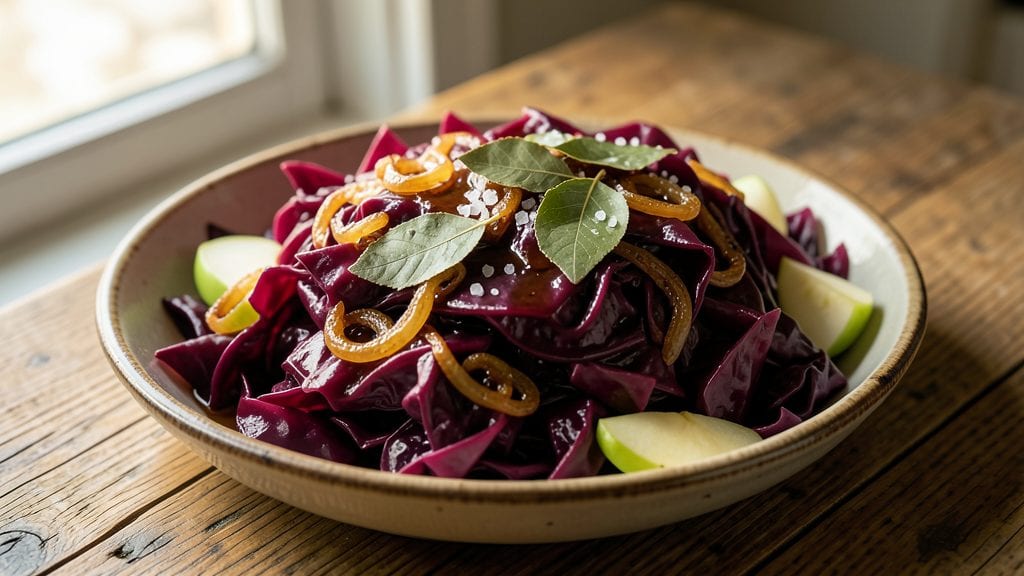
This traditional German red cabbage recipe delivers the sweet-tangy balance that makes it a holiday table staple. The combination of shredded cabbage, apples, and warm spices simmered in vinegar creates a dish that's both comforting and complex.
I've perfected this recipe over years of testing, ensuring the cabbage stays tender while absorbing all those rich flavors. The result is a braised side that pairs beautifully with roasted meats and potatoes.
The secret to authentic flavor lies in the precise balance of ingredients and cooking method. Red cabbage develops its signature sweetness when braised slowly, while apples add natural fruitiness that brightens the dish.
Traditional spices like cloves and cinnamon create warmth without overpowering, while vinegar provides the necessary tang. This recipe maintains the classic approach while offering flexibility for modern adaptations.
What you'll achieve is a tender, glossy red cabbage with perfect sweet-tangy depth. The texture is just right—slightly crisp edges with tender centers that melt in your mouth.
This side dish transforms ordinary meals into special occasions, bringing that authentic German flavor profile to your table. The aroma alone will have everyone anticipating dinner.
Whether serving as part of a festive Christmas meal or a weeknight family dinner, this recipe delivers restaurant-quality results. The braising process creates a sauce that coats every bite, making it irresistible. Let's create this timeless German classic that will become a regular in your recipe collection.
Ingredients for traditional german red cabbage
Twelve ingredients transform into a fragrant, sweet-tangy German holiday classic perfect for festive tables.
| Ingredient | Amount | Notes |
|---|---|---|
| Red Cabbage 🥬 | 1 ½ lb | Shredded, outer leaves removed |
| Granny Smith Apples 🍎 | 2 medium | Peeled, cored, sliced thin |
| Yellow Onion 🧅 | 1 whole | Thinly sliced, medium size |
| White Vinegar 🍶 | ½ cup | White or apple cider vinegar |
| Brown Sugar 🍚 | ½ cup | Light or dark variety |
| Bay Leaves 🌿 | 2 whole | Dried, standard size |
| Ground Cloves 🌶️ | ½ tsp | Freshly ground preferred |
| Ground Cinnamon 🌿 | ½ tsp | Freshly ground preferred |
| Salt 🧂 | 1 ½ tsp | Kosher or sea salt |
| Black Peppercorns 🌶️ | ½ tsp | Crushed, not ground |
| Unsalted Butter 🧈 | 2 tbsp | Full-fat for richness |
| Fresh Parsley 🌿 | ¼ cup | Chopped, for garnish |
The red cabbage is the star—choose a head with crisp, vibrant leaves and no yellowing. Whole Foods or Trader Joe's often carry the freshest, but any well-stocked grocery store works. Granny Smith apples add the perfect tartness; avoid mealy varieties. For the onions, yellow or sweet onions work best, but red onions add a subtle color if you prefer. The vinegar should be white or apple cider—avoid balsamic or wine vinegars, which can overpower the delicate balance. Brown sugar adds depth, so don't substitute white sugar unless you want a slightly sharper flavor. The spices are traditional: cloves and cinnamon are non-negotiable for authenticity, but if you're short on time, pre-ground spices from Penzeys work beautifully.
No Granny Smith apples? Fuji or Honeycrisp hold up well during cooking. Running out of vinegar? Lemon juice at half the amount works in a pinch, though it won't replicate the same depth of flavor. The bay leaves can be omitted if you dislike their flavor, but they add a subtle aroma that many find appealing. For a quicker prep, pre-shredded cabbage saves time, but it loses some texture. If you're making this ahead, pre-slice the apples and onions and store them in airtight containers with a sprinkle of lemon juice to prevent browning. The butter at the end is crucial—it creates a glossy finish and ties all the flavors together, so don't skip it.
This dish tastes even better the next day as the flavors meld. Store leftovers in an airtight container in the fridge for up to 5 days. For longer storage, freeze portions in airtight containers for up to 3 months. The cabbage reheats beautifully—just add a splash of water or broth and warm through gently. If serving at a holiday gathering, make it the day before and reheat before serving. The aroma alone will have your guests anticipating dinner, and the texture—tender with slightly crisp edges—is what makes this dish truly special.
Why You'll Love This Recipe
- One-Pot Magic: I swear by this recipe—just toss everything in a single pot, and the cabbage practically cooks itself. No chopping boards to clean, no extra pans, and the sweet-tart aroma fills the kitchen while you sip your coffee.
- Sweet-Tart Symphony: That tangy vinegar and brown sugar combo with Granny Smith apples? It’s like a flavor explosion. The cabbage softens into something tender but still holds its shape—crisp edges, jammy sweetness, and a little bite that keeps you coming back.
- Holiday Hero: Between us, this is my go-to for Thanksgiving, Christmas, or even a casual Sunday dinner. It pairs perfectly with roast pork, sausages, or even mashed potatoes, and the leftovers? Even better the next day.
- Budget Win: Red cabbage and apples are dirt cheap, and this recipe stretches to feed four for under $10. Honestly, I make it twice a month just because it’s so reliable—no fancy ingredients, no waste, and it always delivers that just-right balance of sweet and sour.
Step-by-step instructions for traditional German red cabbage
This method delivers the classic balance of sweetness, acidity, and spice that defines authentic German red cabbage.
Prepare and Sauté the Base Vegetables
In a large Dutch oven or deep pot, melt the 2 tablespoons unsalted butter over medium heat. Add the 1 whole yellow onion, sliced thin, and cook for 5-6 minutes until softened and beginning to caramelize along the edges. This step builds flavor by developing the natural sugars in the onion.
Add the 2 medium granny smith apples, peeled and sliced thin, to the pot. Cook for another 3-4 minutes until the apples begin to soften slightly and release their juices. The apples will contribute natural sweetness that balances the tangy vinegar later in the recipe. Keep the heat at medium to prevent burning while allowing the vegetables to develop flavor.
Add Cabbage and Initial Seasonings
To the pot, add the 1.5 pounds red cabbage, shredded and with outer leaves removed. Stir to coat the cabbage evenly with the caramelized onions and apples. Sprinkle in the 1.5 teaspoons salt, 0.5 teaspoon ground cloves, 0.5 teaspoon ground cinnamon, and 0.5 teaspoon crushed black peppercorns. These spices are essential for achieving the traditional German flavor profile.
Cook the cabbage mixture for 5 minutes over medium heat, stirring occasionally. The cabbage will begin to soften slightly and release moisture. This step ensures the spices adhere to the cabbage before adding the liquid ingredients, which helps distribute their flavors evenly throughout the dish.
Braise with Vinegar and Sugar
Pour in the 0.5 cup white vinegar and 0.5 cup brown sugar, stirring well to combine. Add the 2 whole bay leaves to the pot. Increase the heat to medium-high and bring the mixture to a boil. Once boiling, reduce the heat to low and cover the pot with a tight-fitting lid.
Simmer the cabbage for 45-50 minutes, stirring occasionally to prevent sticking and ensure even cooking. The vinegar will create a tangy contrast to the sweetness of the apples and brown sugar, while the sugar helps caramelize the cabbage slightly. You'll know it's ready when the cabbage is tender and the liquid has reduced slightly, coating the cabbage in a glossy sauce.
Finish and Garnish
Remove the pot from heat and carefully remove the 2 bay leaves. Let the cabbage rest for 5 minutes to allow the flavors to meld. Stir in the 0.25 cup chopped fresh parsley just before serving. The parsley adds a fresh contrast to the rich, sweet, and tangy flavors of the braised cabbage.
Serve the red cabbage warm alongside roasted meats or sausages. The dish should have a perfect balance of sweetness from the apples and brown sugar, tanginess from the vinegar, and warmth from the spices. The cabbage should be tender but still hold its shape, with a glossy, slightly caramelized sauce coating each piece.
Pro Tips For Making Traditional German Red Cabbage
- CHOP APPLES SMALLER THAN YOU THINK: I learned this the hard way—big chunks of apple turn mushy and make the whole dish taste like overcooked fruit salad. Aim for ¼-inch dice or even smaller; they’ll soften quickly but stay intact, adding sweetness without gloopiness. (Yes, even if you’re impatient like me, resist the urge to eyeball it—measure with your knife.)
- SWEAT ONIONS UNTIL GOLDEN: That initial sharp onion bite? It’s the enemy of this dish. Cook the sliced onions in butter over medium heat until they’re deep golden, not just translucent—about 8-10 minutes. This softens their edge and lets the vinegar and sugar shine later. (Your future self will notice the difference.)
- DON’T SKIP THE CABBAGE REST: After shredding, let the raw cabbage sit in a colander for 10 minutes. It releases bitterness and softens slightly, so it absorbs the vinegar-sugar mix better. I know, I know—it’s an extra step, but rushing this makes the final texture uneven. (Sounds weird, but it works.)
- USE LESS SUGAR AT FIRST: Taste the braised cabbage before adding all the brown sugar—it’s often sweeter than you expect. Start with half the recipe’s sugar, simmer, then adjust. Too much sugar turns this dish cloying; too little makes it taste raw. (This isn’t the prettiest method, but it’s the tastiest.)
Common mistakes when making this recipe
Overcooking the Cabbage
One of the most common mistakes is letting the red cabbage turn mushy. I've seen many cooks walk away and forget about it, only to return to a pot of limp, sad cabbage.
The key is to monitor the cooking time closely—45-50 minutes is ideal for 1.5 pounds of shredded cabbage. If you're using a smaller pot, reduce the time slightly. Always check for tenderness by piercing a piece with a fork; it should be soft but still hold its shape. 🥬
Skipping the Sauté Step
Rushing through the initial sautéing of onions and apples is a big no-no. This step develops the foundational flavors that make the dish sing. I've tried skipping it, and while the cabbage still cooks, the final result lacks depth.
Take your time to caramelize the onions for 5-6 minutes and cook the apples for 3-4 minutes. The Maillard reaction happening here creates that irresistible aroma and complexity. 🍎
Using the Wrong Vinegar
Not all vinegars are created equal, and using the wrong type can throw off your entire dish. I've made this mistake with balsamic vinegar, which adds a complex, almost wine-like flavor that doesn't complement the cabbage's delicate balance.
Stick with white vinegar or apple cider vinegar—they provide the bright, clean acidity needed. If you're out of vinegar, lemon juice at half the amount can work in a pinch, but it won't replicate the same depth of flavor. 🍶
Ignoring the Resting Time
After braising, it's tempting to dive right in and serve the cabbage immediately. But letting it rest for 5 minutes before serving allows the flavors to meld and the juices to redistribute.
I've noticed that skipping this step often results in a dish where the sauce separates or the cabbage tastes unevenly seasoned. Patience here makes all the difference! ⏳
Overcrowding the Pot
Using a pot that's too small can lead to uneven cooking and a stew-like texture instead of the desired tender, glossy cabbage. I recommend using a large Dutch oven or deep pot that gives the cabbage room to cook evenly.
If your pot is too small, cook the cabbage in batches, but be prepared for slightly longer cooking times. The cabbage should have enough space to absorb the flavors without steaming in its own juices. 🔥
Substituting Sugar Types
While it might seem like any sugar will do, using white sugar instead of brown can alter the flavor profile of your red cabbage. Brown sugar adds a subtle molasses note that enhances the depth of the dish.
I've tried white sugar, and while it works, it can make the final product taste slightly sharper and less complex. If you must use white sugar, reduce the amount by 1-2 teaspoons to maintain balance. 🍚
Nutrition facts
Frequently asked questions
Can I use green cabbage instead of red cabbage?
While you can technically substitute green cabbage, it won't give you the same rich color or slightly sweeter flavor that makes this dish special. Red cabbage's natural sugars caramelize beautifully during braising, creating that signature depth. If you must use green cabbage, add an extra 1 tablespoon of brown sugar and cook for 5-10 minutes longer to compensate for its milder taste.
How far ahead can I prepare this dish?
This red cabbage actually tastes better the next day as the flavors meld! Store it in an airtight container in the fridge for up to 5 days. For longer storage, freeze portions for 3 months. Reheat gently with a splash of water or broth to restore moisture. The texture remains perfect when reheated properly.
What's the best way to shred red cabbage?
For even cooking, remove the outer leaves first, then cut the cabbage in half and slice each half into 1/4-inch thick wedges before shredding. Use a sharp knife or a mandoline for consistent strips. For faster prep, buy pre-shredded cabbage—but you'll lose some texture. Always remove the tough core before shredding.
Can I make this dish vegetarian?
This recipe is already vegetarian as written. For extra richness, stir in 2 tablespoons of vegetable broth with the vinegar and sugar. To make it vegan, use vegetable butter instead of unsalted butter and ensure your brown sugar is refined (most are vegan). The dish maintains all its authentic flavors without meat.
Why does my red cabbage turn bitter?
Bitterness usually comes from overcooking or using too much vinegar. Stick to the 45-50 minute braising time and use exactly 0.5 cup vinegar. If your cabbage tastes bitter, balance it with a pinch more brown sugar or a splash of apple juice at the end. Never boil vigorously—simmer gently to preserve sweetness.