Main Courses
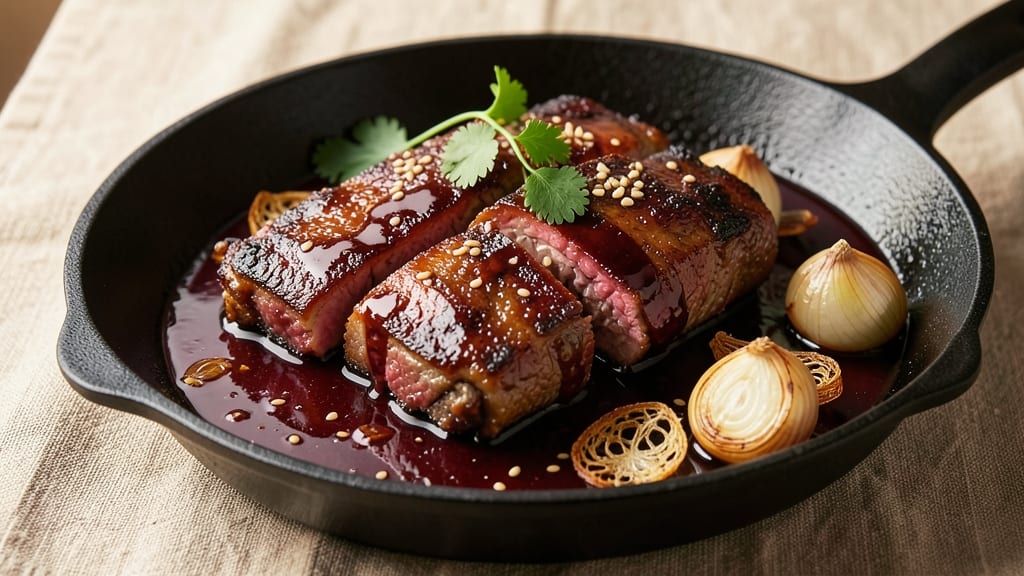
Short ribs without wine might sound like a compromise, but this deep umami braise proves you don’t need it to create restaurant-quality depth.
The secret lies in a carefully balanced blend of beef broth, soy sauce, and a touch of vinegar that delivers the same rich complexity as wine—without the alcohol. After years of perfecting this technique, I’ve developed a method that transforms tough cuts into melt-in-your-mouth tenderness with a caramelized crust.
What sets this recipe apart is the two-stage cooking process: a high-heat sear to lock in flavor, followed by a slow braise that breaks down collagen for fall-apart texture.
The umami-rich sauce, built with soy sauce and beef broth, delivers layers of savory depth that stand up to any wine-based braise. This method is foolproof—no wine required—and the results speak for themselves.
By the time you serve these short ribs, you’ll have a dish that’s rich, tender, and packed with flavor—perfect for a special dinner or a weekend project. The sauce clings to every bite, creating a velvety finish that elevates the beef to its full potential.
Serve with mashed potatoes or crusty bread to soak up every last drop of that deep umami sauce.
This recipe is designed to be versatile—adjust the seasoning to your taste, or add aromatics like garlic and thyme for extra depth. The key is patience and precision, but the reward is a dish that rivals any wine-braised short ribs. Let’s get cooking!
Ingredients for short ribs recipe without wine
Four pounds of beef, bold flavors, and no wine needed to create restaurant-quality short ribs.
| Ingredient | Amount | Notes |
|---|---|---|
| Beef Short Ribs 🥩 | 4 lb | Bone-in, 2-3 inches thick |
| Beef Broth 💧 | 3 cups | Low-sodium preferred |
| Soy Sauce 🍶 | ½ cup | High-quality, not reduced |
| Balsamic Vinegar 🍷 | ¼ cup | Aged 25+ years preferred |
| Brown Sugar 🍯 | ¼ cup | Light or dark |
| Garlic Cloves 🧄 | 6 cloves | Peeled, smashed |
| Yellow Onion 🧅 | 1 whole | Large, chopped |
| Fresh Thyme 🌿 | ¼ cup | Leaves only, chopped |
| Olive Oil 🫒 | 2 tbsp | Extra-virgin for searing |
| Salt 🧂 | 1 ½ tbsp | Kosher or sea salt |
| Black Pepper 🌶️ | 1 tbsp | Freshly ground |
| Tomato Paste 🍅 | 2 tbsp | Smooth, no sugar added |
| Worcestershire Sauce 🍶 | 1 tbsp | Anchovy-free if needed |
| Fresh Rosemary 🌿 | ⅛ cup | Chopped, optional |
The beef is everything here—bone-in short ribs with that thick, meaty cut are non-negotiable. Look for well-marbled pieces at your butcher shop or grocery store's meat counter. Costco often has great prices if you're feeding a crowd, but most regular stores carry them too. If you're buying a whole packer, ask for the ribs to be cut into 2-3 inch chunks for even cooking. Skip the pre-cut ones with bones sticking out—they're harder to handle and don't brown as nicely. For the broth, low-sodium is key—you'll be adding plenty of salt yourself anyway.
No soy sauce? Coconut aminos or tamari work in a pinch, though the flavor will be slightly different. Short on balsamic vinegar? Apple cider vinegar plus 1 tsp brown sugar mimics the depth. The tomato paste can be swapped for 1 cup crushed tomatoes, but it'll make the sauce thinner. Fresh thyme and rosemary are ideal, but dried works at one-third the amount. If you're adding rosemary, use it sparingly—it's strong stuff. The Worcestershire sauce has anchovies, so if you're avoiding those, skip it or use vegan Worcestershire. For extra umami without wine, add 1 tsp fish sauce or 1 tbsp miso paste to the braising liquid.
These ribs reheat beautifully—350°F for 15-20 minutes covered with foil, then broil 2 minutes for crispiness. The sauce thickens as it cools, so add 1-2 tbsp water if it's too stiff when reheating. Store ribs and sauce separately in the fridge for up to 5 days—the sauce actually improves overnight. For freezing, portion the ribs with some sauce in airtight bags for up to 6 months. The sauce freezes well too, but add a splash of water when reheating to loosen it up.
Why You'll Love This Recipe
- Here’s what sold me: reheating these ribs turns them into better tacos or sandwiches the next day. The meat gets even more tender, and that caramelized brown sugar glaze? It turns into a sticky, sweet-savory sauce that makes leftovers feel like a treat.
- I’ll be real: short ribs can feel fancy, but this recipe stretches them far. The beef broth and brown sugar bulk it up without breaking the bank, and a single pan of ribs feeds four—or leaves enough for lunch the next day. Fancy dinner, half the cost.
Step-by-step instructions for short ribs without wine
Here's how to make fall-off-the-bone tender ribs with bold umami flavors—no wine needed.
Sear the Short Ribs for Maximum Flavor
Pat the 4 lb beef short ribs dry with paper towels—this is key for that perfect crust. Heat 1 tbsp of the olive oil in a heavy Dutch oven over medium-high heat until shimmering. Working in batches, add the ribs bone-side down and sear for 3-4 minutes until deeply browned. Flip and repeat on the other side.
Don't rush this step. You want those ribs to develop a rich, caramelized crust that'll melt in your mouth later. If your pan gets crowded, work in smaller batches to avoid steaming instead of searing. Once all ribs are golden brown, remove them and set aside on a plate.
Build the Umami-Packed Braising Liquid
In the same Dutch oven, add the remaining 1 tbsp olive oil and reduce heat to medium. Add the chopped yellow onion and cook for 5 minutes until softened. Stir in the smashed garlic cloves and cook for another 30 seconds until fragrant—this prevents burning while building flavor.
Add the 2 tbsp tomato paste and cook for 2 minutes, stirring constantly, until it darkens slightly. This creates a flavorful base. Pour in the 3 cups beef broth, scraping up any browned bits from the bottom. Add the soy sauce, balsamic vinegar, brown sugar, Worcestershire sauce, and all 1.5 tbsp salt. Bring to a simmer and let it bubble gently for 5 minutes to meld the flavors.
Braise Until Fork-Tender
Return the seared short ribs to the Dutch oven, bone-side up. Add the chopped fresh thyme and fresh rosemary. Pour in enough water to just cover the ribs (about 1 cup). Bring to a boil, then reduce heat to low, cover tightly with a lid, and transfer to a 325°F oven.
Braise for 3 hours. You'll know they're ready when a knife slides in easily and the meat pulls apart with gentle pressure. If the liquid reduces too much before then, add a splash of water or broth to keep the ribs submerged. The ribs should be fork-tender but not falling apart completely.
Finish and Reduce the Sauce
Once tender, uncover the Dutch oven and increase oven temperature to 400°F. Let the ribs braise uncovered for another 15-20 minutes to thicken the sauce slightly and deepen the flavors. This step concentrates the umami and gives you that glossy, caramelized surface.
Remove the ribs and transfer them to a serving platter. Skim off any excess fat from the sauce, then adjust seasoning with black pepper if needed. The sauce should coat the back of a spoon—if it's too thin, simmer uncovered for another 5-10 minutes to reduce further. Serve the ribs hot with the sauce spooned over the top.
Pro Tips For Making Short Ribs Recipe Without Wine
- Sear Until Black: DESCRIPTION: I learned this the hard way—don’t just brown the ribs. Push that pan until the edges of the meat turn deep brown, almost black in spots. That crust locks in flavor when it braises, and skipping it means your sauce will taste flat. High heat, 3-4 minutes per side—no rushing.
- Deglaze Aggressively: DESCRIPTION: After searing, don’t just splash in broth. Scrape the pan like you’re mad at it—those stuck-on bits are pure flavor. Use a wooden spoon to loosen them, then add the balsamic vinegar and soy sauce right away while the pan’s still smoking. Let it bubble for 30 seconds before adding broth. That’s where depth happens.
- Skip the Crowd: DESCRIPTION: If your pot’s too packed, the ribs steam instead of braise. Start with a single layer, even if it means two batches. The sauce needs room to work its magic, and crowded ribs turn out soggy. My grandmother’s rule: "If it looks like a taco, it’s too tight."
- Brown Sugar First: DESCRIPTION: Sounds weird, but it works: dissolve the brown sugar in cold broth before adding it to the pot. This prevents graininess and lets it caramelize slowly during braising. If you toss it in dry, you’ll end up with sugar crystals clinging to the meat—no one wants that. Stir it in early, then let the heat do the rest.
Troubleshooting your short ribs recipe without wine
Ribs Not Browning
If your ribs aren’t developing that deep golden crust during searing, your pan isn’t hot enough or they’re too crowded. Heat your Dutch oven over medium-high heat until a drop of water sizzles instantly.
Work in batches—2 ribs at a time—so they have room to brown properly. Pat them completely dry with paper towels before searing, or the steam will prevent browning. 🔥
Sauce Too Thin
A watery sauce usually means you didn’t reduce it enough. After braising, uncover the pot and simmer over medium heat for 10-15 minutes, stirring occasionally. For extra thickness, mash 1 tsp cornstarch with 1 tbsp cold water, stir it in, and cook for 2 more minutes.
If the sauce is still too thin, reduce it further by simmering uncovered until it coats the back of a spoon.
Ribs Still Tough
Undercooked ribs are often the result of insufficient braising time or too much liquid. Ensure your oven stays at 325°F and cover tightly with a lid. If your ribs aren’t fork-tender after 3 hours, add 1 cup hot water and braise for another 30-60 minutes.
For extra tenderness, try adding 1 tsp baking soda to the braising liquid—it raises the pH and helps break down collagen faster.
Burnt Onions or Garlic
Onions and garlic burn quickly, so keep heat at medium when cooking them. Sauté onions for 5 minutes until softened but not browned, then add garlic and cook for just 30 seconds until fragrant.
If they burn, remove them and start fresh with a new batch. A little char adds depth, but burnt flavors dominate the dish. 🌶️
Liquid Evaporating Too Fast
If your braising liquid disappears before the ribs are done, add ½ cup hot water or broth every 30 minutes to keep them submerged. This prevents the ribs from drying out and ensures even cooking.
For extra insurance, cover the pot with foil before placing the lid on—this creates a tighter seal and slows evaporation.
Sauce Too Salty
If your sauce tastes overly salty, balance it with 1 tbsp honey or brown sugar to mellow the saltiness. For a more dramatic fix, add ½ cup unsalted heavy cream or ½ cup beef broth and simmer for 5 minutes to dilute the salt.
Taste as you go—adjust gradually to avoid overcorrecting. A splash of lemon juice can also brighten the flavors if needed.
Nutrition facts
Frequently asked questions
Can I substitute beef broth with another liquid?
For a deeper flavor, use chicken broth mixed with 1 cup tomato juice or 1 cup coconut milk for richness. Avoid water—it lacks the umami base that makes this dish shine. A splash of beef consommé (if available) adds extra depth without wine.
How do I make this recipe faster?
For 3-hour ribs, use a 6-quart slow cooker on low with all ingredients (except herbs) added at once. Sear first, then braise covered. Or try the pressure cooker method: Sear ribs, then cook with all liquids on high pressure for 90 minutes, followed by a 10-minute natural release. The texture will be slightly different but still tender.
What's the best way to reheat leftovers?
Reheat ribs covered in a 350°F oven for 15-20 minutes with a splash of beef broth to keep them moist. For extra crispiness, broil for 2 minutes at the end. The sauce reheats best in a saucepan over medium-low heat, stirring occasionally. Add 1-2 tbsp water if it thickens too much.
Can I use bone-in or boneless short ribs?
Bone-in ribs are ideal—they stay juicier and add flavor to the braising liquid. If using boneless, reduce braising time to 2 hours (they cook faster). For bone-in, never skip the 3-hour braise—the collagen needs time to break down.
What sides pair best with these wine-free ribs?
Rich, starchy sides balance the deep flavors: creamy mashed potatoes, crusty sourdough bread, or polenta. For contrast, try roasted Brussels sprouts with bacon or sautéed green beans with garlic. The umami sauce also works beautifully with egg noodles or wild rice.