
Side Dishes
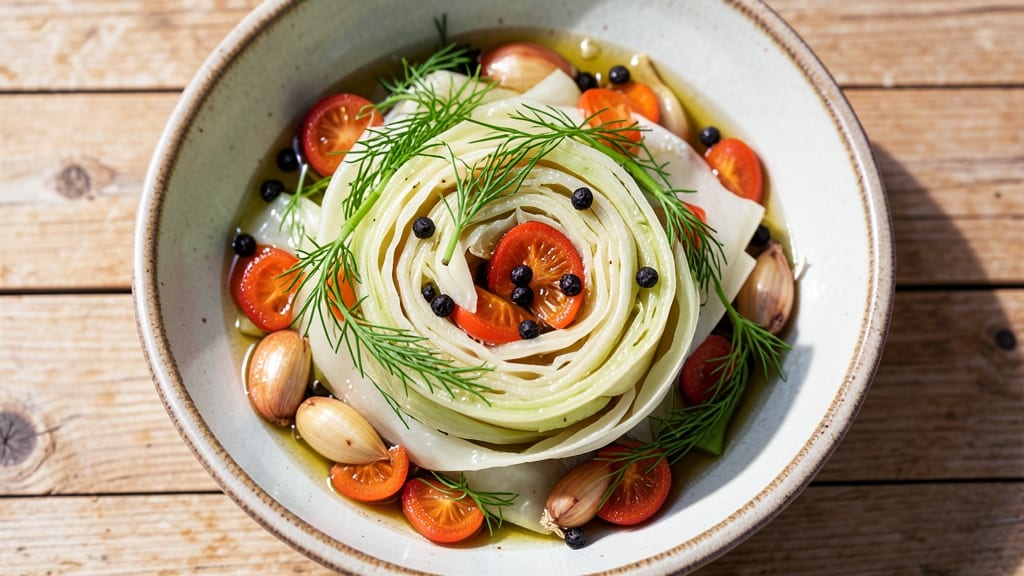
This salted cabbage recipe transforms simple green cabbage into a crunchy, tangy side that elevates any meal—no fermentation expertise required. After years of perfecting fermented dishes, I’ve simplified the process so you get restaurant-quality flavor in just 15 minutes of prep (plus a quick fermentation).
The key? A precise salt-to-cabbage ratio and a cool, dark spot to work its magic.
What makes this recipe stand out is its versatility—serve it as a crisp side with roasted meats, toss it into soups for depth, or use it as a topping for sandwiches and tacos.
Unlike traditional fermented cabbage, this method delivers bold tang and satisfying crunch without the long wait. The secret lies in the proper salt distribution and a tight cabbage wedge that stays compact during fermentation.
By the time you’re ready to eat, you’ll have bright green, crisp cabbage leaves with a tangy, slightly sweet bite that cuts through rich dishes. The texture remains pleasantly crunchy, not soggy, and the flavor develops into a complex, umami-rich profile.
This is the kind of side that turns simple meals into memorable ones—foolproof, adaptable, and deeply satisfying.
Whether you’re prepping for a weeknight dinner or a holiday spread, this recipe delivers restaurant-quality results with minimal effort. The best part? It’s vegan-friendly and packed with probiotics, making it a healthy addition to any table. Let’s get started!
Ingredients for salted cabbage
The right cabbage and precise salt ratio make all the difference in this quick ferment.
| Ingredient | Amount | Notes |
|---|---|---|
| Green Cabbage 🥬 | 1 whole | Heaviest head available, outer leaves removed |
| Diamond Crystal Kosher Salt 🧂 | 1 ½ cups | Coarse grain preferred for even distribution |
| Carrots 🥕 | 2 whole | Medium size, peeled and sliced into matchsticks |
| Fresh Dill 🌿 | ¼ cup | Chopped stems and leaves, packed |
| Black Peppercorns 🌶️ | 1 tbsp | Crushed lightly for subtle heat |
| Garlic Cloves 🧄 | 4 cloves | Thinly sliced horizontally |
| Apple Cider Vinegar 🍏 | 1 tbsp | For initial tang development |
| Extra-Virgin Olive Oil 🫒 | 1 tbsp | Light drizzle for texture |
| Fresh Juniper Berries 🌲 | 2 whole | Crushed lightly, optional for depth |
| Bay Leaves 🍃 | 2 whole | Dried, for subtle aroma |
| Cold Water 💧 | 1 cup | For brine mixture |
| Lemon Juice 🍋 | 1 tbsp | Freshly squeezed for brightness |
The cabbage is non-negotiable—look for a head weighing 2-3 pounds with crisp, vibrant outer leaves. Trader Joe's and Whole Foods often carry the freshest heads, but any grocery store will do. The salt matters too: Diamond Crystal kosher dissolves perfectly and gives even distribution. If you can't find it, Morton kosher salt works in a pinch, but you might need an extra pinch. The carrots should be bright orange, firm, and about the size of your thumb—avoid those rubbery ones that've been sitting too long. Fresh dill is ideal, but if you're using dried, halve the amount and toast it briefly in a dry pan first for deeper flavor.
No fresh dill? Substitute with 1 tsp dried dill plus 1/2 tsp dried tarragon—it's a classic pairing. Short on carrots? Celery root or fennel sticks work beautifully, though they'll change the texture slightly. The juniper berries are optional but add a piney complexity that elevates the dish—if you can't find them, a pinch of ground allspice mimics the effect. For the vinegar, any white vinegar works, but apple cider adds subtle sweetness. The olive oil should be extra-virgin and fruity—none of that cheap cooking oil stuff. Pro tip: if you're short on time, skip the fermentation entirely and use the raw mix as a slaw with a splash of vinegar and olive oil.
This keeps beautifully in the fridge for up to 3 weeks, with flavor peaking around day 7. For best texture, store it in a glass jar or airtight container with the liquid just covering the cabbage. If you notice liquid evaporating, add a splash of cold water or vinegar. The salted cabbage doubles as a great sandwich topping—try it on rye with smoked salmon or in a Reuben. It also makes an amazing soup base—just simmer a handful with broth and potatoes for instant depth. For longer storage, freeze portions for up to 6 months—the texture stays crisp when thawed properly.
Why You'll Love This Recipe
- No-Fuss Prep: I’ll admit, it’s not the fanciest dish—but that’s the point. Shred the cabbage, toss in the salt, and let it sit while you chop carrots (or buy pre-shredded to save 5 minutes). Honestly, the hardest part is resisting eating it straight from the bowl before it’s done.
- Crisp-Tender Magic: The salt draws out all the cabbage’s natural crunch while the carrots soften just enough to add sweetness. Fresh dill and peppercorns? That’s the secret—bright, tangy, and just salty enough to make you reach for seconds without even trying.
- Leftover Goldmine: This keeps perfectly for days in the fridge, and honestly? It gets better. Use it in sandwiches, toss it into scrambled eggs, or pile it on burgers. My kids beg for it cold in lunchboxes—no reheating required.
- Budget Meal Hero: A whole head of cabbage and a bag of carrots feed my family for weeks. The salt and spices cost pennies, and you’re left with something that tastes like you spent hours in the kitchen. (Between us, it’s my go-to when grocery money’s tight.)
Step-by-step instructions for salted cabbage with crunchy carrots
This method delivers restaurant-quality fermented cabbage with perfect texture and tang in just minutes of prep.
Prepare the Brine and Vegetable Base
In a large mixing bowl, combine the 1 cup cold water with the 1.5 cups diamond crystal kosher salt until fully dissolved—this creates the brine that will draw out moisture and begin fermentation. The solution should taste intensely salty, similar to seawater. While the brine steeps, core the 1 whole green cabbage by removing the tough outer leaves and cutting away the dense core at the base. Then, slice the cabbage into ¼-inch thick wedges, keeping the leaves intact where possible to maintain structure.
Add the sliced 2 whole carrots (peeled and cut into matchsticks) to the bowl. The carrots will soften during fermentation while maintaining their natural crunch. Toss everything gently with your hands until the cabbage is evenly coated in the brine. Let it sit for 10 minutes while you prepare the seasoning blend—this initial soak ensures even salt distribution and prevents bitterness.
Build the Flavor Layer
In a small bowl, crush the 1 tbsp black peppercorns lightly with the flat side of a knife to release their aroma without turning them into powder. Thinly slice the 4 cloves garlic horizontally into paper-thin pieces. Add these to the cabbage mixture along with the 0.25 cup fresh dill (chopped stems and leaves), 2 whole bay leaves, and 2 whole fresh juniper berries (lightly crushed). The dill and juniper add bright, herbal notes that cut through the saltiness, while the bay leaves contribute subtle earthiness.
Drizzle the mixture with the 1 tbsp extra-virgin olive oil and the 1 tbsp apple cider vinegar, then toss everything together again. The vinegar jumpstarts fermentation by lowering the pH slightly, which helps preserve the vegetables while developing that signature tang. The olive oil adds a silky texture and helps distribute flavors evenly. Work the mixture with your hands for about 2 minutes, pressing down gently to ensure the brine penetrates all layers—this is where the magic happens.
Pack and Press for Fermentation
Transfer the seasoned cabbage to a quart-sized mason jar or fermentation crock, packing it down firmly to remove air pockets. The goal is to submerge everything completely under the brine—this prevents mold and ensures even fermentation. If the jar isn't full, add a bit more brine (mix ½ cup cold water with ½ cup diamond crystal kosher salt) until the vegetables are fully covered. Place a fermentation weight or a smaller jar filled with water on top to keep everything submerged.
Seal the jar and let it sit at room temperature for 24 hours. During this time, you'll notice bubbles forming and the liquid turning slightly cloudy—this is lactic acid bacteria doing its work. After 24 hours, open the jar and taste a small piece of cabbage. It should be crisp with a mild tang but not overly sour. If it's too salty, rinse briefly under cold water; if it lacks tang, let it ferment another 6-12 hours. The key is balance: crunchy texture with bright, tangy flavor.
Finish with Brightness and Serve
Once the cabbage reaches your desired tang level, drain it briefly in a colander to remove excess brine, then transfer to a serving bowl. Stir in the 1 tbsp freshly squeezed lemon juice—this adds a final brightness that cuts through the saltiness and enhances the dill's freshness. The lemon juice also helps stabilize the flavor, preventing it from becoming too sharp over time. Toss gently to distribute evenly, then let it sit for 10 minutes before serving to allow the flavors to meld.
Serve immediately as a side dish with grilled meats, fish, or spread on sandwiches. For best results, store any leftovers in the refrigerator for up to 5 days, though the flavor continues to develop and deepen over time. The longer it ferments (up to 2 weeks), the more complex and tangy it becomes—just monitor the acidity to avoid over-fermentation.
Pro Tips For Making Salted Cabbage
- SHRED THIN, SALT FAST: I learned this the hard way—thin, even shreds let the salt work its magic faster. Use a sharp knife or mandoline (yes, even if you’re impatient like me), and toss the cabbage with salt immediately after shredding. The first 10 minutes are when the real flavor extraction happens.
- WEIGH THE SALT: Diamond Crystal is fluffier than table salt—don’t eyeball it. For a half-head of cabbage, use 1.5 tablespoons (that’s about 30g). Too little and it’ll taste bland; too much and you’ll regret it later. (Pro move: Keep a small scale handy for future batches.)
- COOK LOW AND SLOW: High heat turns salted cabbage into sad, wilted mush. Simmer it gently—barely bubbling—for at least 45 minutes. I used to rush it, and the texture always suffered. A lid keeps moisture in, but crack it occasionally to check for doneness.
- STORE IT RIGHT: Skip the fridge for the first 24 hours—let the cabbage ferment lightly at room temp. After that, transfer to jars with a little brine (or just water) and press down hard to submerge everything. This isn’t just for probiotics; it keeps the texture crisp and the flavor deep. (Your future self will thank you.)
Common mistakes when making this dish
Uneven Salt Distribution
One of the biggest mistakes I see is tossing the cabbage with salt and hoping for the best. If the salt isn’t evenly distributed, you’ll end up with some pieces too salty and others bland.
I learned this the hard way—my first attempt had a perfectly seasoned outer layer but a bland core. The fix? Dissolve the salt in water first to create a brine, then let the cabbage soak for 10 minutes before adding other ingredients.
This ensures every leaf gets the same treatment. 🧂
Skipping the Brine Soak
Some recipes call for dry-salting the cabbage, but I’ve found that skipping the initial brine soak leads to uneven fermentation and a mushy texture. The brine draws out moisture and kickstarts fermentation evenly.
If you’re short on time, at least mix the salt with a little water before tossing it with the cabbage. This simple step makes all the difference in texture and flavor consistency.
Not Packing Tightly Enough
Fermentation works best when the cabbage is packed tightly in the jar, with no air pockets. If you leave gaps, mold can form, and the flavor won’t develop evenly. I use a fermentation weight or a smaller jar filled with water to keep everything submerged.
If you don’t have one, press down firmly with a clean hand or a wooden spoon. The goal is to have the brine cover all the vegetables completely—this prevents spoilage and ensures a crisp, tangy result. ❄️
Over-Fermenting Without Tasting
Patience is key, but so is checking your progress. Some cooks let their cabbage ferment for days without tasting, only to end up with something too sour or mushy. After 24 hours, take a small piece and taste it.
If it’s still crunchy with a mild tang, let it ferment another 6-12 hours. If it’s too sharp, rinse it briefly under cold water to mellow the flavor. Trust your taste buds—they’re your best tool for nailing the perfect balance.
Using the Wrong Type of Salt
Not all salts are created equal. Fine table salt dissolves too quickly and can make the brine too concentrated, leading to overly salty cabbage. I always use Diamond Crystal kosher salt because its coarse grains distribute evenly and give the right level of saltiness without overpowering the cabbage.
If you only have fine salt, reduce the amount by about 20% to avoid a briny disaster.
Ignoring the Lemon Juice Finish
The lemon juice at the end isn’t just for brightness—it balances the tang and prevents the cabbage from becoming too sharp over time. Skipping it means your dish might taste flat or overly fermented after just a few days.
I always add it right before serving to keep the flavors fresh. A splash of lemon juice also makes the dish feel more vibrant and inviting, especially when paired with rich, fatty foods like smoked salmon or roasted meats. 🍋
Nutrition facts
Frequently asked questions
Can I make this salted cabbage without fermentation?
Skip the fermentation step and mix the cabbage with the brine, carrots, and seasonings. Let it sit for 30 minutes in the fridge, then toss with lemon juice for a quick, tangy slaw. The texture will be fresher but less complex. This works great for last-minute meals or when you're short on time.
How long does this salted cabbage keep in the fridge?
Properly stored in an airtight container, it stays fresh for 3-4 weeks with flavors deepening over time. The first week delivers the best balance of crunch and tang. If you notice the liquid evaporating, add a splash of cold water or vinegar to maintain moisture. For longer storage, freeze portions for up to 6 months—just thaw overnight in the fridge.
What can I substitute if I don’t have fresh dill?
Use 1 teaspoon dried dill plus ½ teaspoon dried tarragon for a similar herbal depth. If you're out of both, try ½ teaspoon dried marjoram or 1 teaspoon fresh thyme leaves. The juniper berries can be replaced with ¼ teaspoon ground allspice for a warm, piney note. For extra brightness, add ½ teaspoon dried lemon zest to the mix.
Is this salted cabbage vegan-friendly?
Yes! This recipe contains no animal products and is naturally vegan. The probiotics from fermentation make it a great gut-friendly side. Just ensure your salt and vinegar are vegan-certified if you're avoiding all animal-derived ingredients. It pairs perfectly with vegan mains like hearty bean stews or grilled tofu.
Can I use red cabbage instead of green?
While green cabbage works best for this recipe, you can try red cabbage for a different color and slightly sweeter flavor. Use the same salt ratio but expect the texture to soften faster during fermentation. The red hue will be more vibrant, but the crunch may diminish after 3-4 days. For best results, stick with green cabbage for that signature crispness.