
Snacks
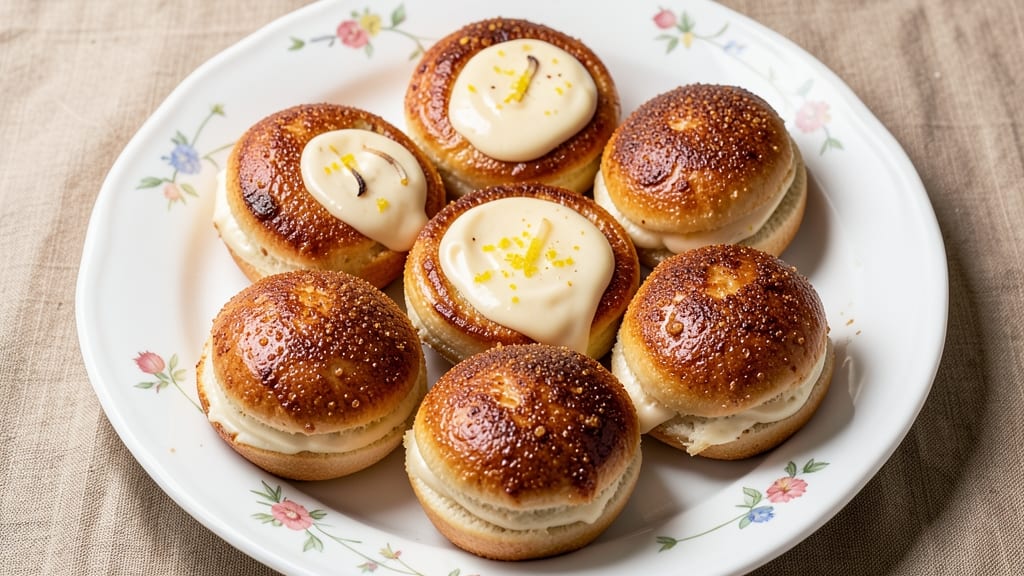
This cream buns recipe delivers flaky, golden layers of pastry filled with velvety vanilla bean custard—a professional-level treat you can bake at home.
Standing on a step stool in my Nonna’s kitchen in Sicily, I first learned how to layer dough with precision, and these buns are the American twist I perfected over years of baking. The key?
A delicate balance between crispy, buttery layers and a rich, swirled filling that stays creamy even after baking.
What sets these apart is the golden glaze that caramelizes into a sticky, crackly finish while keeping the interior tender. The vanilla custard filling is thickened just enough to hold its shape but still melts slightly when bitten into, creating that signature cream bun experience.
Ready in about 2 hours (including chilling time), this recipe transforms simple ingredients into something that looks and tastes like a bakery masterpiece.
Each bite offers a perfect harmony of textures—crispy, flaky dough giving way to smooth, fragrant custard. The glaze adds a subtle sweetness that enhances the vanilla without overpowering it, while the buttery layers provide structure that holds up beautifully.
These buns are ideal for breakfast, afternoon tea, or dessert—just be prepared to have them disappear faster than you can slice them.
The best part? Variations are endless—swap the vanilla custard for chocolate ganache or strawberry jam for a fruity twist. Serve warm with a dusting of powdered sugar or a drizzle of extra glaze. Let’s get baking—your kitchen will smell like a Parisian patisserie in no time.
Ingredients for cream buns
Twelve simple ingredients create twelve golden, custard-filled buns that taste like a Parisian bakery.
| Ingredient | Amount | Notes |
|---|---|---|
| All-Purpose Flour 🌾 | 4 cups | Sifted for light texture |
| Unsalted Butter 🧈 | 1 cup | Cold, cubed for pastry |
| Granulated Sugar 🍚 | ½ cup | Plus 2 tbsp for glaze |
| Vanilla Bean Paste 🌿 | 2 tsp | Or 1 vanilla bean scraped |
| Large Eggs 🥚 | 2 whole | Cold, for dough binding |
| Milk 🥛 | ½ cup | Cold, for custard |
| Cornstarch 🌾 | 2 tbsp | For custard thickness |
| Heavy Cream 🥛 | ½ cup | Full-fat for richness |
| Powdered Sugar 🍚 | 1 cup | For glaze and dusting |
| Salt 🧂 | ½ tsp | Kosher for balance |
| Vanilla Extract 🌿 | 1 tsp | Pure extract preferred |
| Lemon Zest 🍋 | 1 tsp | Brightens custard |
| Water 💧 | 1 tbsp | For glaze consistency |
The butter matters most—use European-style unsalted (like Plugrá or Kerrygold) for maximum flakiness. I always buy it in 1-pound blocks at Whole Foods or Costco—it stays fresher longer. For the vanilla, Madagascar beans give the best aroma, but paste works in a pinch. The flour should be bread flour if you've got it, but all-purpose works fine. Sift it first—trust me, it makes a difference. And don't skip the cold ingredients: cold butter and milk are key for that professional flake.
No vanilla bean? Double the vanilla extract plus a pinch of cinnamon for depth. Running low on powdered sugar? Granulated sugar works at 1:1, but the glaze won't be as glossy. For the custard, arrowroot powder can replace cornstarch (same amount). The lemon zest is optional but adds brightness—organic lemons from the store work great. If your butter's too soft, chill it for 20 minutes before cutting into cubes. And if you're making these ahead, freeze the shaped buns before baking—they'll be even more tender when reheated.
These keep beautifully—3 days at room temp wrapped in a towel (the classic way), or 1 week in the fridge. Reheat in a 350°F oven for 10 minutes to restore that bakery-fresh crunch. The glaze sets quickly, so work fast when drizzling. I like to portion the dough into 12 equal pieces (about 3 oz each) so they bake evenly. For leftovers, slice and toast—nothing beats warm cream buns with a cup of tea. The custard stays creamy for days, so don't stress about eating them all at once.
Why You'll Love This Recipe
- Butter Love First: I swear by the vanilla-infused butter—just a few tablespoons of softened butter mixed with vanilla paste and sugar transforms the dough into something ridiculously tender. That first bite of flaky, buttery layers with the warm vanilla kiss? It’s the kind of flavor that makes you pause mid-mouthful.
- No-Fuss Dough: Honestly, this dough comes together in five minutes—just mix, knead, rest, and roll. No fancy equipment, no waiting hours for gluten development. Even if I’m tired, I can handle this. The secret’s in the cold butter cutting into the flour; it keeps things manageable and forgiving.
- Breakfast or Snack: Between us, these are my go-to for any time of day. Toast them for breakfast with jam, pack them in lunchboxes, or serve them warm with a sprinkle of powdered sugar at a brunch spread. The dough’s neutral flavor means it plays nice with everything—sweet, savory, or even a drizzle of honey.
- Leftovers That Last: I make a double batch on Sundays because these stay fresh for days—no sad, dry buns here. The butter keeps them moist, and I’ll reheat slices in a toaster or oven until golden. Plus, the ingredients are cheap staples: flour, sugar, eggs. It’s my budget-friendly way to feel fancy without breaking the bank.
Step-by-step instructions for cream buns recipe: golden glaze and vanilla bean swirls
Let's create these flaky, swirled buns with a velvety vanilla custard center and glossy sugar glaze.
Prepare the Vanilla Bean Custard Filling
In a medium saucepan, combine the 0.5 cup heavy cream, 0.5 cup milk, 0.5 cup granulated sugar, 2 tbsp cornstarch, 0.5 tsp salt, 1 tsp vanilla extract, and 1 tsp lemon zest. I like to use a whisk to make sure everything dissolves smoothly before heating.
Place the saucepan over medium heat and stir constantly until the mixture thickens to a pudding-like consistency—this should take about 5-7 minutes. You'll know it's ready when it coats the back of a spoon and leaves a distinct trail. Remove from heat and stir in the 2 tsp vanilla bean paste. Let it cool completely before using, as warm custard will melt the butter in your dough.
Make the Flaky Pastry Dough
In a large mixing bowl, combine the 4 cups all-purpose flour and 0.5 tsp salt. Cut in the 1 cup cold cubed unsalted butter using a pastry cutter or your fingers until the mixture resembles coarse crumbs with pea-sized butter pieces remaining. This cold butter is what creates those beautiful flaky layers.
Add the 2 cold whole large eggs and mix just until the dough comes together. Be careful not to overwork it—just combine until it holds when pressed. Turn the dough out onto a lightly floured surface and knead gently for about 1 minute until smooth. Divide the dough into 12 equal pieces, about 2 ounces each, and shape into balls. Cover with plastic wrap and refrigerate for 30 minutes to firm up.
Assemble and Bake the Cream Buns
Preheat your oven to 375°F. Roll each chilled dough ball into a 6-inch circle on a lightly floured surface. Spoon about 1 tablespoon of the cooled vanilla custard onto each circle, leaving a ½-inch border around the edges. Fold the dough over the filling to completely enclose it, then seal the edges by pinching gently with your fingers.
Place the assembled buns on a parchment-lined baking sheet, spacing them about 2 inches apart. Bake for 18-20 minutes until they're puffed and golden brown. The edges should be crisp while the centers remain tender. Let the buns cool on the baking sheet for 5 minutes before transferring to a wire rack.
Prepare the Sugar Glaze
While the buns are still warm, prepare the glaze by combining the 1 cup powdered sugar, 2 tbsp granulated sugar, and 1 tbsp water in a small bowl. Whisk until smooth and glossy—this should take about 1 minute. The glaze should be thick enough to coat the back of a spoon but still drizzle freely.
Drizzle the glaze over the cooled buns, allowing it to drip down the sides for that classic cream bun look. For extra shine, you can sprinkle a tiny bit of powdered sugar on top right after glazing. Serve warm for the best texture—these buns are best enjoyed fresh from the oven with that perfect balance of flaky pastry, creamy custard, and sweet glaze.
Pro Tips For Making Cream Buns
- Chill the Dough Twice: Cream buns need a real rest—first after mixing, then after shaping. I used to skip the second chill, and my buns would spread like pancakes in the oven. Wrap shaped buns in plastic, then refrigerate for at least 2 hours (or overnight). Cold dough rises slower but develops flavor, and those seams stay crisp.
- Soften Butter Properly: Room-temperature butter is key, but don’t microwave it—it’ll melt into a greasy mess. Instead, cut unsalted butter into small cubes and let them sit on a plate for 1–2 hours at room temp. Press a finger into a cube: if it leaves a slight dent, it’s ready. Overly soft butter = dense buns; too firm = uneven texture.
- Don’t Overfill the Piping Bag: Stuffing those buns too full is how you end up with a puddle of cream on the counter. Fill the piping bag just to the top—no more than ¾ full—and twist the end tightly. Overfilling means the cream will burst out during baking, leaving you with soggy bottoms and a sticky disaster.
- Use a Thermometer for Baking: The oven’s “350°F” reading is a lie—calibrate yours or grab an instant-read thermometer. Bake until the center hits 190°F (200°F for extra-gooey cream). I learned this the hard way when my first batch came out underdone and gummy. A few extra minutes at the right temp guarantees a perfect crumb every time.
Common mistakes when making this dish
Overworking the Dough
Here's a mistake I see often—especially when nerves kick in: overworking the dough. Once you've combined the flour and cold butter into pea-sized pieces, handle it just enough to form smooth balls.
Over-kneading develops gluten, which makes the buns tough instead of tender. I promise, a 1-minute knead is all you need—any more and you'll ruin that delicate flakiness we're going for. 🧑🍳
Skipping the Chill Time
Rushing the 30-minute chill before rolling is another common error. Cold dough prevents the butter from melting too soon, which is what creates those beautiful layers. If you skip this step, your buns will spread unevenly and lose that professional bakery look.
Trust me, the extra half-hour waiting pays off in golden, flaky perfection.
Uneven Filling Distribution
When assembling, I've seen people either overload the centers with custard or leave too much empty space. Aim for about 1 tablespoon per bun—enough to create a generous filling without bursting the dough.
Also, leave that ½-inch border around the edges to prevent leaks during baking. The filling should be centered but not touching the edges.
Baking at Wrong Temperature
Your oven might read 375°F, but it's probably not accurate. Invest in an oven thermometer—mine's from Thermoworks and it's a game-changer. Bake these buns at the exact temperature specified.
Too hot and they'll brown too quickly before cooking through; too cool and they'll stay doughy inside. The edges should be golden while the centers remain tender.
Glazing Too Early
Freshly baked buns release steam that makes glaze run everywhere. Let them cool completely on the baking sheet for 5 minutes before glazing. I've seen people try to glaze them right out of the oven, and it always ends up messy.
The glaze needs something to cling to, not a steamy surface. Patience here makes all the difference for that professional finish.
Using Warm Ingredients
This is a cardinal sin in pastry work. Cold butter, cold eggs, and cold milk are non-negotiable for flaky layers. If your butter softens while you're working, pop it in the freezer for 10 minutes to firm up again.
I keep my eggs in the fridge until just before using—no exceptions. The temperature contrast between cold ingredients and hot oven creates those magical layers we all love. 🥶
Nutrition facts
Frequently asked questions
Can I make these cream buns without vanilla bean paste?
Use 2 teaspoons pure vanilla extract plus a pinch of cinnamon for depth. For extra richness, add a splash of 1 teaspoon rum extract to the custard. The flavor will still be delicious—just slightly different from the authentic vanilla bean aroma.
How do I store leftover cream buns?
Keep them fresh for 3 days at room temperature by wrapping in a clean kitchen towel (the classic way!). For longer storage, refrigerate in an airtight container for up to 1 week. Reheat in a 350°F oven for 10 minutes to restore that bakery-fresh crunch. The custard stays creamy even after reheating!
Can I substitute the custard filling with something else?
Yes! Try chocolate ganache (melt ½ cup chocolate chips with ½ cup heavy cream), strawberry jam, or even lemon curd. For a lighter option, use whipped cream mixed with 1 teaspoon powdered sugar. Just ensure your filling is cool before assembling to prevent melting the dough.
Why did my cream buns turn out dense instead of flaky?
This usually happens from overworking the dough or using warm butter. Handle the dough minimally (just 1 minute of kneading) and keep all ingredients cold. Also, ensure your oven is at the correct 375°F—use an oven thermometer to verify. The layers need that precise temperature contrast to puff properly.
How can I make these ahead of time?
Shape the buns and freeze them on a tray before baking. Once frozen solid, transfer to a ziplock bag for up to 1 month. Bake straight from frozen, adding 2-3 extra minutes to the baking time. For unbaked dough balls, freeze them for 2 weeks—thaw overnight in the fridge before rolling. Perfect for busy mornings!