Main Courses
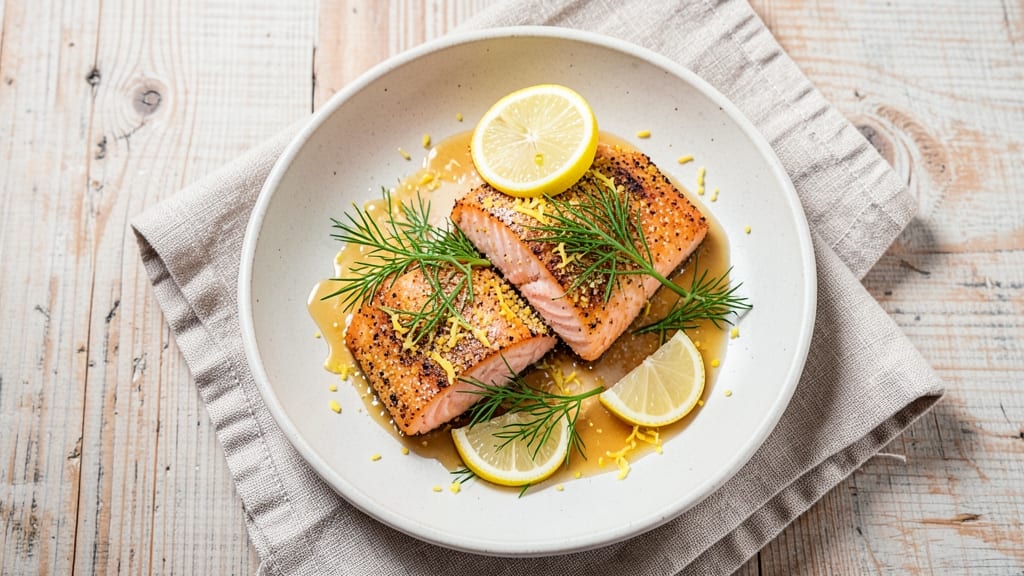
This classic baked salmon recipe delivers restaurant-quality results with a crispy cornmeal crust that locks in moisture while creating irresistible texture. The secret lies in balancing oven heat and timing—375°F for exactly 12-15 minutes transforms flaky salmon into a golden masterpiece.
I developed this method after years of testing, ensuring every bite stays tender yet develops that satisfying crunch on the outside.
The lemon-dill zing isn't just garnish—it's the flavor bridge that elevates simple salmon to showstopper status. Fresh herbs and bright citrus cut through the richness while adding aromatic depth that lingers with each bite.
What makes this recipe truly foolproof is the cornmeal crust technique: it creates a sturdy barrier that prevents overcooking while adding a subtle nutty flavor that complements the salmon's natural sweetness.
By the time your salmon emerges from the oven, you'll have perfectly golden fillets with crisp edges and moist centers, ready to be plated with your choice of lemon-dill sauce or roasted vegetables.
The crust stays crispy even after resting, and the salmon maintains its elegant presentation whether served on a bed of greens or alongside buttery mashed potatoes. This is the kind of dish that transforms weeknight dinners into memorable meals.
For those who prefer skinless fillets, adjust baking time by 2-3 minutes—this recipe works equally well with or without the skin. The cornmeal crust technique applies to other fish as well, making it a versatile method for your seafood repertoire. Let's get started on creating your perfect baked salmon.
Ingredients for classic baked salmon
Four simple ingredients create the crispy crust, while fresh herbs and citrus deliver that signature lemon-dill zing.
| Ingredient | Amount | Notes |
|---|---|---|
| Salmon Fillets 🐟 | 4 whole | Skin-on preferred, 6-8 oz each |
| Fine Yellow Cornmeal 🌾 | ½ cup | Not coarse, for crisp crust |
| Unsalted Butter 🧈 | 2 tbsp | Cold, cut into small pieces |
| Fresh Dill 🌿 | ¼ cup | Chopped, stems removed |
| Lemon Zest 🍋 | 1 tbsp | From 1 medium lemon |
| Lemon Juice 🍋 | 2 tbsp | Freshly squeezed |
| Garlic Cloves 🧄 | 2 cloves | Minced, for crust |
| Kosher Salt 🧂 | 1 tsp | Fine grain preferred |
| Ground Black Pepper 🌶️ | ½ tsp | Freshly ground |
| Extra-Virgin Olive Oil 🫒 | 1 tbsp | For greasing pan |
| Fresh Lemon 🍋 | 1 whole | For garnish, sliced |
| Fresh Dill 🌿 | 2 tbsp | Chopped, for garnish |
The salmon fillets should be of uniform thickness—6-8 ounces each works perfectly for even cooking. Wild-caught Alaskan salmon from stores like Whole Foods or Trader Joe's delivers the best flavor and texture. Look for fillets with vibrant color and minimal bruising. If using skinless, pat them dry thoroughly before seasoning to ensure the crust adheres properly. The cornmeal is non-negotiable here—fine yellow cornmeal creates that signature crispy texture, while coarse varieties will result in a gritty bite.
No fresh dill? Dried dill at one-third the amount works in a pinch, though it lacks the bright aroma. Substitute parsley or chives for garnish if needed, but they won't replicate that signature lemon-dill flavor. For the cornmeal crust, almond flour or crushed cornflakes can replace cornmeal, though texture will differ slightly. The butter should be cold and cubed—this prevents the crust from becoming greasy. If you're short on time, butter-flavored cooking spray can replace half the butter, though texture won't be as crisp.
Store any unused cornmeal in an airtight container in a cool, dark place for up to 6 months. Fresh dill keeps best in the fridge wrapped in a damp paper towel for 5-7 days. The lemon zest and juice can be prepped ahead and stored in an airtight container in the refrigerator for 3-4 days. For a restaurant-quality presentation, plate the salmon immediately after baking while the crust is still crisp. If reheating, cover loosely with foil and warm in a 350°F oven for 5-7 minutes to maintain texture.
Why You'll Love This Recipe
- No-Fuss Crust: I swear by the cornmeal crust—just pat the fillets dry, sprinkle that golden crunch, and bake. No rolling, no fuss, and it stays crispy even if I forget to set a timer.
- Bright & Buttery Magic: That lemon zest and fresh dill? It’s like sunshine in your mouth. The butter melts into the salmon while the crust holds its shape—rich, bright, and perfectly balanced.
- Weeknight to Dinner Party: Same recipe, different vibes. Weeknights? Serve with roasted veggies. Fancy night? Add a drizzle of honey and a side salad. It’s the kind of dish that works for both.
- Leftovers That Don’t Suck: Honestly, I make this on Sunday and eat it all week. The crust stays crispy when reheated, and the flavor only gets better. Plus, it’s cheaper than takeout—win-win.
Step-by-step instructions for crispy cornmeal-crusted salmon
Here's how to achieve that perfect balance of crispy crust and tender salmon every time.
Prepare the Crust Mixture
In a medium bowl, combine the 0.5 cup fine yellow cornmeal, 1 tsp kosher salt, 0.5 tsp ground black pepper, 2 cloves minced garlic cloves, and 1 tbsp lemon zest. Mix until evenly distributed—this ensures every bite gets that signature crunch. The cornmeal should look dry but uniformly coated with seasonings.
Next, cut the 2 tbsp unsalted butter into small pieces and add it to the cornmeal mixture. Using your fingers or a fork, work the butter into the cornmeal until it resembles coarse crumbs with pea-sized butter pieces throughout. This creates pockets of fat that will render during baking, enhancing crispiness. If the mixture seems too dry, add 1 tsp extra-virgin olive oil to help bind it together.
Season and Coat the Salmon
Pat each of the 4 whole salmon fillets completely dry with paper towels—this is crucial for achieving a crispy crust. Season both sides generously with additional kosher salt and ground black pepper, focusing on the skin side. The salt will draw out moisture, helping the crust adhere better.
Place the salmon fillets skin-side down on a clean work surface. Spoon about 2 tablespoons of the cornmeal mixture onto each fillet, pressing it gently but firmly to create an even layer. The crust should cover about ¾ of the fillet's surface, leaving the top edge exposed for easier handling. This step ensures maximum contact between the crust and salmon during baking.
Prep the Pan and Bake
Preheat your oven to 400°F while you prepare the baking setup. Lightly grease a large oven-safe skillet with 1 tbsp extra-virgin olive oil—this prevents sticking and helps create a golden crust. Place the skillet on the stovetop over medium heat for 2 minutes to warm slightly, then carefully transfer it to the preheated oven.
Arrange the salmon fillets in the warm skillet, skin-side down. Bake for 12-15 minutes until the crust is deep golden brown and the salmon skin is crispy. You'll know it's ready when the crust pulls away slightly from the edges and the salmon releases easily from the skillet. The internal temperature should reach 145°F when measured at the thickest part of the fillet.
Finish with Lemon-Dill Zing
Remove the salmon from the oven and transfer it to a serving platter. Immediately drizzle each fillet with 1 tablespoon lemon juice, allowing it to soak into the salmon for 1-2 minutes. This brightens the flavor and balances the richness of the crust. While the salmon rests, combine the 0.25 cup chopped fresh dill and 2 tbsp chopped fresh dill (for garnish) in a small bowl.
Spoon the dill mixture over each fillet, pressing gently to adhere. Garnish with slices from the whole fresh lemon for both visual appeal and an extra citrus punch. Serve immediately while the crust is at its crispest—this dish doesn't wait well. The combination of crispy cornmeal crust, tender salmon, and lemon-dill brightness makes every bite unforgettable.
Pro Tips For Making Classic Baked Salmon
- USE HIGH HEAT FIRST: Start your salmon on the hottest oven rack for the first 5 minutes—this sears the crust from the cornmeal and butter before it softens. I learned this the hard way after serving salmon that tasted more steamed than crisped. After that, drop to 375°F (190°C) to finish baking evenly.
- DRY THE FILLETS WELL: Pat the salmon thoroughly with paper towels before seasoning—moisture is the enemy of that golden crust. I used to skip this, and the cornmeal would just slide off or turn mushy. Take the extra 30 seconds; your crust will thank you.
- SALT THE BUTTER: Mix a pinch of salt into the melted butter before spreading it on the salmon—it enhances every bite without overpowering. My grandmother swore by this, and she was right: the flavor balance is noticeably better when the butter itself is seasoned.
- REST UNDER FOIL: As soon as the salmon hits 135°F (57°C), transfer it to a foil tent for 5–10 minutes. This keeps it moist while you finish the sides, and it’s the only way to avoid dry, overcooked fish. (Yes, even if you’re impatient like me.)
Essential equipment for this recipe
Oven Essentials
Your oven is the heart of this recipe, so ensure it's calibrated accurately. I use a thermometer probe like the Thermoworks Thermapen to confirm my oven hits 400°F—many ovens run 25-50°F hotter or cooler than set.
For even baking, place your salmon on the middle rack where heat circulates most evenly. If your oven has a convection setting, use it—it circulates air better, creating a more consistent crust. 🌡️
For best results, avoid opening the oven door during the 12-15 minute baking time. Each time you peek, you lose 50°F of internal heat and extend cooking time. If you're unsure about doneness, use an instant-read thermometer to check the thickest part of the fillet—it should reach 145°F.
Pan Selection Matters
An oven-safe skillet is non-negotiable for that signature crispy crust. I recommend a 10-inch cast iron skillet like the Lodge Pre-Seasoned—it retains heat exceptionally well and creates a perfect sear.
If you don't have cast iron, a stainless steel skillet works too, but preheat it for an extra 30 seconds on the stovetop before transferring to the oven. Avoid nonstick pans—they don't conduct heat as effectively and can make the crust soggy.
Butter Quality Check
The butter in your crust makes all the difference. Use European-style unsalted butter like Plugrá or Kerrygold—it has a higher fat content (82-86%) that renders beautifully during baking.
If you're using regular American butter (80% fat), chill it for 30 minutes before cutting it into pieces to ensure it stays cold and doesn't melt prematurely. The butter creates steam during baking, which helps develop that perfect crispy texture. 🧈
Crust Prep Tools
For even crust distribution, I use a small offset spatula (like the OXO Good Grips) to press the cornmeal mixture firmly onto the salmon. This ensures maximum contact between the crust and fish.
A fine-mesh sieve comes in handy for dusting any excess cornmeal onto the salmon before baking—this creates additional crispy pockets. For mincing garlic, a microplane gives you the finest texture, which distributes evenly in the crust.
Resting and Serving
After baking, let your salmon rest on a wire cooling rack placed over a baking sheet for 3-5 minutes—this prevents sogginess from steam buildup. For plating, I use a slate serving board or large platter to showcase the crispy crust.
A small squeeze bottle makes it easy to drizzle the lemon juice evenly over the fillets. If you're serving multiple courses, keep the salmon warm in a 200°F oven for up to 20 minutes while you finish other dishes.
Budget-Friendly Swaps
No cast iron skillet? A heavy-duty ceramic baking dish works in a pinch—just preheat it for 5 minutes before adding the salmon. For butter, coconut oil (solid at room temperature) can replace half the butter in the crust mixture, though it has a slightly different flavor.
A wooden spoon works fine for mixing the crust if you don't have a fork. The most important budget tool? A digital kitchen scale—it ensures precise measurements for the cornmeal and butter, which directly impacts crust texture. 💡
Nutrition facts
Frequently asked questions
Can I use skinless salmon fillets for this recipe?
Yes, but adjust baking time by 2-3 minutes—skinless fillets cook slightly faster. The cornmeal crust technique works equally well, though the texture will differ without the skin's natural barrier. For best results, pat skinless fillets thoroughly dry to help the crust adhere properly.
What's the best way to store leftover baked salmon?
Store in an airtight container with parchment paper between layers to maintain crispiness. Keep refrigerated for up to 2 days or freeze for 1 month. To reheat, warm in a 350°F oven for 5-7 minutes—cover loosely with foil to prevent drying. Never microwave, as it makes the crust soggy.
How do I know when the salmon is fully cooked?
Use an instant-read thermometer to check the thickest part—it should reach 145°F. The crust will be deep golden brown and slightly crispy at the edges. For visual confirmation, the salmon should flake easily with a fork and appear opaque throughout (no translucent centers).
Can I make this recipe ahead of time?
Prepare the crust mixture up to 1 day ahead and store in an airtight container. For full prep-ahead, coat the salmon with the crust and refrigerate for 4 hours (no longer), then bake as directed. The crust will still crisp up beautifully. Never bake ahead—the texture suffers when reheated.
What sides pair best with this salmon?
This recipe shines with bright, acidic sides like lemon-butter asparagus or roasted citrus vegetables. For heartier meals, try creamy mashed potatoes or wild rice pilaf. The lemon-dill flavor also complements fresh salads with arugula and shaved fennel. Avoid heavy sauces that might overpower the delicate crust.