
Sauces & Condiments
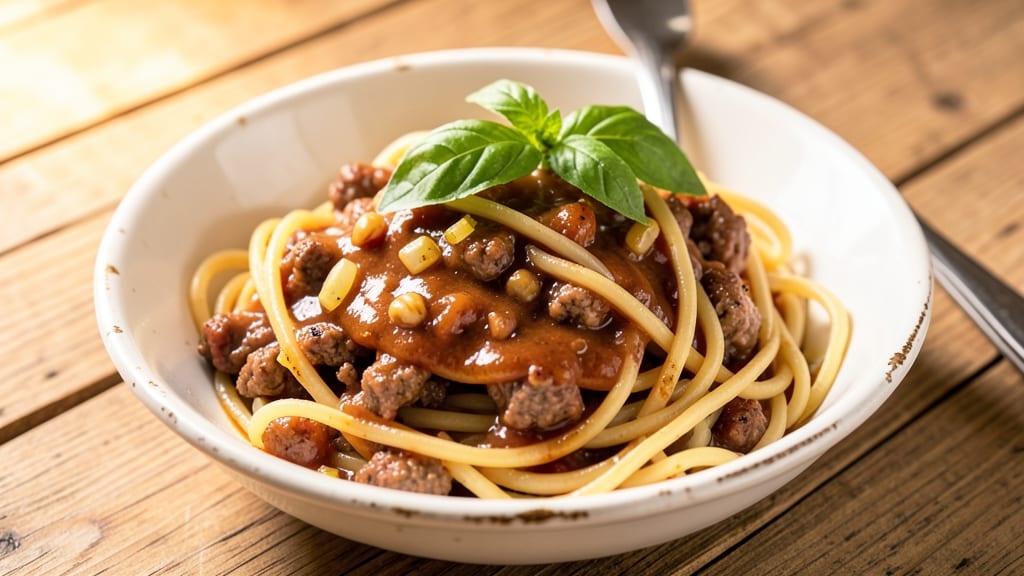
Betty Crocker spaghetti meat sauce brings back the nostalgic comfort of homemade Italian dinners, and this one-pot version delivers restaurant-quality flavor in just 30 minutes. The secret lies in browning the ground beef properly and letting the sauce simmer until thick and rich—no fancy techniques required.
I've perfected this method over years of testing, ensuring every bite delivers that classic American-Italian balance of tender meat, tomatoey sauce, and perfectly al dente pasta.
This recipe stays true to the original while making it easier than ever, combining all ingredients in a single pot for minimal cleanup. The ground beef develops deep, savory flavors when browned, while the canned tomatoes and spices create a well-rounded sauce that coats every strand of spaghetti.
What makes it special is how it transforms simple pantry staples into a meal that feels like a warm hug—ideal for busy weeknights when you crave something hearty but don't have hours to spend in the kitchen.
By the time you twirl that first forkful, you'll taste perfectly cooked spaghetti nestled in a thick, flavorful meat sauce with just the right amount of seasoning. The sauce clings to each noodle, creating that satisfying mouthfeel we all remember from childhood dinners.
This is comfort food at its finest—familiar, comforting, and packed with the kind of flavor that makes you want to serve it again and again.
Serve with a sprinkle of fresh parsley and a side of garlic bread for the full experience. The beauty of this recipe is its versatility—it works as a quick weeknight dinner or a satisfying meal for a crowd. Let's get started on creating this timeless classic in your own kitchen.
Ingredients for betty crocker spaghetti meat sauce
Pantry staples you already own, plus one trip to the meat counter.
| Ingredient | Amount | Notes |
|---|---|---|
| Ground Beef 🥩 | 1 lb | 80% lean for best flavor |
| Spaghetti 🍝 | 8 oz | Uncooked, al dente preferred |
| Canned Tomato Sauce 🍅 | 1 can | 28 oz, no salt added |
| Water 💧 | 4 cups | For pasta boiling |
| Yellow Onion 🧅 | 1 whole | Medium size, diced small |
| Garlic Cloves 🧄 | 3 cloves | Fresh, minced |
| Italian Seasoning 🌿 | 1 tbsp | Or 1 tsp dried oregano |
| Dried Oregano 🌿 | ½ tsp | If no Italian seasoning |
| Salt 🧂 | 1 tsp | Kosher or sea salt |
| Black Pepper 🌶️ | ½ tsp | Freshly ground preferred |
| Sugar 🍚 | 1 tsp | Balances acidity |
| Olive Oil 🫒 | 1 tbsp | For browning beef |
| Fresh Parsley 🌿 | ¼ cup | Chopped, for garnish |
The ground beef is where the magic happens. 80% lean gives you that perfect meaty flavor without too much fat—Costco or Walmart usually have it pre-packaged in 1-pound bags. If you're buying a whole chuck roast, ask the butcher to grind it fresh. The onions should be firm and bright white or yellow, not wilted or sprouting. I grab the yellow onions from the store brand section—they're perfect for this. Fresh garlic is non-negotiable here; the pre-minced stuff in jars just doesn't cut it. If you're short on time, Trader Joe's frozen garlic cubes work in a pinch.
No Italian seasoning? Mix 1/2 tsp dried oregano, 1/4 tsp dried basil, and a pinch of red pepper flakes—it's basically the same thing. The canned tomato sauce can be any brand, but Rao's or Muir Glen are my go-tos—they're just more flavorful than the store basics. If you're worried about salt content, skip the salt in the sauce and add it at the end. The sugar balances the acidity in the tomatoes, so don't skip it—brown sugar works too. For the parsley, fresh is best, but dried works at one-third the amount if that's all you've got.
This sauce reheats like a dream—honestly, it tastes better the next day once everything melds together. Store leftovers in an airtight container in the fridge for up to 5 days. I always double the recipe and freeze half for lazy days. The pasta cooks in the same pot as the sauce, so there's no extra dishes. Just remember to reserve 1/2 cup of pasta water before draining—it's liquid gold for adjusting the sauce consistency.
Why You'll Love This Recipe
- No-Chop Required: I swear by this recipe because it only asks for one onion—diced, sure, but I just pulse it in the food processor. Ground beef browns in minutes, and the canned tomato sauce? Just open, pour, stir. Honestly, the hardest part is waiting for the water to boil.
- Savory Simplicity Wins: That rich tomato sauce clings to the beef like it’s been simmering all day, and the onions caramelize just enough to add depth without fuss. Between us, it’s the kind of meal where the flavors build effortlessly—no fancy techniques, just pure satisfaction.
- Lunchbox Magic: Make a double batch on Sunday, and you’ve got dinner covered and packed lunches for the week. The sauce stays vibrant in the fridge, and the spaghetti reheats like it was just cooked. My kids actually eat their leftovers—rare, but true.
- Budget Night Hero: Ground beef and canned sauce? That’s less than $5 for four servings. I’ll be real: this is my go-to when I’m pinching pennies but still want something that feels special. Plus, it stretches easily—add a can of beans or extra veggies if you’re feeling generous.
Step-by-step instructions for Betty Crocker spaghetti meat sauce
Here's how to make this classic Italian comfort dish in one pot—rich, flavorful, and ready in under 30 minutes.
Brown the Ground Beef
Heat the 1 tablespoon olive oil in a large Dutch oven or deep skillet over medium-high heat. Add the 1 pound ground beef, breaking it apart with a wooden spoon as it cooks. Let it brown for 5-6 minutes, stirring occasionally, until it loses its raw color and starts to crisp around the edges.
This browning step is crucial—it develops deep, meaty flavors that form the foundation of your sauce. Drain any excess fat that accumulates in the bottom of the pan after browning, leaving about 1 tablespoon to help build the sauce. If the beef releases too much fat, carefully remove it with a paper towel.
Sauté the Aromatics
Add the diced yellow onion to the skillet and cook for 3-4 minutes until it becomes translucent and slightly softened. Stir in the 3 minced garlic cloves and cook for another 30 seconds until fragrant—you'll smell that unmistakable garlic aroma filling your kitchen.
Don't let the garlic burn; it should just perfume the meat and onions. If it starts to darken too quickly, reduce the heat slightly. This step infuses the entire dish with aromatic depth that makes every bite more flavorful.
Build the Sauce
Pour in the 1 can canned tomato sauce, then add the 1 tablespoon Italian seasoning, 0.5 teaspoon dried oregano, 1 teaspoon salt, 0.5 teaspoon black pepper, and 1 teaspoon sugar. Stir everything together and let the mixture simmer uncovered over medium heat for 10 minutes, stirring occasionally.
The sugar helps balance the acidity of the tomatoes while the spices meld together. You'll notice the sauce thickening slightly as it simmers—this is when all the flavors come together. If the sauce gets too thick, add 1-2 tablespoons of water to loosen it to your preferred consistency.
Cook the Spaghetti
Add the 4 cups water and 8 ounces uncooked spaghetti to the sauce mixture. Stir well to combine, then bring to a boil over high heat. Once boiling, reduce heat to medium-low, cover with a lid, and let it cook for 12-15 minutes, stirring occasionally, until the spaghetti is al dente and the sauce has thickened to coat the noodles completely.
I like to check the spaghetti about 2 minutes before the package's suggested cooking time since it's cooking in a flavorful sauce. The sauce should cling to the noodles beautifully, creating that classic Italian comfort food texture. If the sauce is still too thin, let it cook uncovered for another 2-3 minutes to reduce.
Finish and Serve
Remove the pot from heat and stir in the 0.25 cup chopped fresh parsley. Let the dish sit covered for 2-3 minutes to allow the flavors to meld together one last time. This resting period ensures every bite is packed with flavor.
Serve immediately with extra parsley sprinkled on top if desired. The one-pot method means everything is perfectly combined—no separate sauce to worry about, just rich, comforting spaghetti meat sauce ready to enjoy. This dish tastes even better the next day, so it's perfect for meal prep too!
Pro Tips For Making Betty Crocker Spaghetti Meat Sauce
- CRANK THE HEAT FIRST: The Betty Crocker recipe wants you to brown the beef, but I learned the hard way—low heat means greasy, uncooked crumbles. Hit medium-high right away, break the beef into ½-inch pieces, and let it sizzle for 5-6 minutes until it loses that raw pink. This isn’t just for flavor; it’s what makes the sauce actually taste like meat, not watered-down filler.
- DICE THAT ONION SMALL: The recipe says "chop," but I used to hack it into uneven chunks—big mistake. Tiny dice (⅛-inch or smaller) melt into the sauce instead of sitting as chewy bits. Do this while the beef browns, and by the time you add the tomato sauce, the onion will be so soft it disappears, giving you that deep, sweet base flavor without texture surprises.
- STIR THE SAUCE EARLY: The first 10 minutes after adding the tomato sauce are critical. If you walk away, the bottom turns into a gluey, burnt mess while the top stays thin. Stir every 2-3 minutes—yes, even if it feels like overkill. Once it thickens (around 15 minutes), you can relax, but that initial attention keeps the sauce smooth and consistent, not patchy.
- SALT THE WATER LIKE THE SEA: The recipe’s water-to-pasta ratio is generous, and unsalted water makes the sauce taste bland. Add 1½ tablespoons of salt to the boiling water (for 4 quarts) before tossing in the spaghetti. The pasta absorbs flavor, and when you drain it, the sauce won’t need extra seasoning later—it’ll just work better from the start.
Make-ahead tips for this betty crocker spaghetti meat sauce
Prep Ahead Sauce
The sauce component of this dish is perfect for making ahead—it actually tastes better the next day as the flavors meld together.
After simmering the sauce in Step 3, let it cool completely, then transfer it to an airtight container and refrigerate for up to 5 days or freeze for 3 months.
When you're ready to serve, simply reheat the sauce in a pot over medium heat for 5-7 minutes, stirring occasionally. If it thickens too much, add 1-2 tablespoons of water to restore the perfect consistency. 💫
One-Pot Pasta Prep
For a true make-ahead meal, cook the spaghetti in the sauce as directed in Step 4, then let the entire dish cool completely. Transfer to an airtight container and refrigerate for up to 4 days.
To reheat, cover the container and warm in the microwave for 3-4 minutes, stirring halfway through. For best results, transfer to a pot and heat on medium-low for 5-7 minutes, adding 2-3 tablespoons of water if needed to loosen the sauce.
The pasta will absorb the sauce beautifully, making it taste freshly cooked. ⏰
Freezer-Friendly Portions
Divide the fully cooked spaghetti meat sauce into 2-cup portions in freezer-safe containers or heavy-duty freezer bags. Squeeze out excess air before sealing to prevent freezer burn. Label each portion with the date and freeze for up to 3 months.
When ready to eat, thaw overnight in the refrigerator, then reheat in a pot over medium heat for 8-10 minutes, stirring occasionally and adding water as needed. The sauce will thicken slightly after freezing, so don't worry if it looks a bit dry at first. 🥶
Double Batch Strategy
Make this recipe in double batches—it's perfect for feeding a crowd or prepping meals for the week. Use a large Dutch oven (like All-Clad Stainless Steel) to accommodate the extra ingredients.
After cooking, divide the portions into 4 individual containers (about 2 cups each) for easy grab-and-go meals. I like to freeze half and refrigerate the other half—this way, I always have a ready-made meal on hand for busy nights.
The leftovers keep well for 5 days in the fridge, making this a true time-saver. 💡
Garnish Last Minute
If you're prepping ahead, store the fresh parsley separately until ready to serve. Just before eating, sprinkle it on top for a pop of color and freshness. You can also add other garnishes like grated Parmesan cheese or red pepper flakes at the table.
This keeps the dish looking fresh and vibrant, even after reheating. For extra convenience, pre-chop the parsley and store it in a small airtight container in the fridge for up to 5 days. ✨
Nutrition facts
Frequently asked questions
Can I substitute ground turkey or chicken for the beef?
Ground turkey or chicken works perfectly—just use the same 1 pound amount. For best flavor, brown the poultry thoroughly over medium-high heat until fully cooked (165°F internal temp). The texture will be slightly leaner, so you might want to add 1 tablespoon tomato paste to deepen the sauce's richness.
Why does my sauce turn out too thin or watery?
This usually happens when the sauce doesn't simmer long enough to reduce. Let it cook uncovered for 10-15 extra minutes on low heat, stirring occasionally. If it's still too thin, mix 1 tablespoon cornstarch with 2 tablespoons water, stir into the sauce, and simmer for 2-3 minutes until thickened. For prevention, always use medium heat during simmering, not high.
Can I make this recipe vegetarian?
Yes! Replace the ground beef with 1 pound crumbled tempeh or extra-firm tofu (pressed and pan-fried until crispy). For a meaty texture, add 1/2 cup mushrooms (finely chopped) to the sauce. Boost umami with 1 teaspoon soy sauce or 1/2 teaspoon smoked paprika. The cooking time remains the same, but stir frequently to prevent sticking.
What's the best way to reheat leftovers?
For the best texture, transfer leftovers to a pot and reheat over medium-low heat for 5-7 minutes, stirring occasionally and adding 1-2 tablespoons water as needed. Microwaving works too—cover with a damp paper towel and heat for 2-3 minutes, stirring halfway. Never reheat directly from frozen; thaw in the fridge first. The sauce may thicken slightly after reheating, so adjust with extra water if needed.
Can I use whole wheat or gluten-free pasta?
Certainly! Whole wheat pasta adds 2-3 extra minutes to cooking time—check for al dente at 14-16 minutes instead of 12-15. For gluten-free pasta, follow package instructions carefully as cooking times vary. The sauce will still cling beautifully, but gluten-free noodles may need 1 extra tablespoon water during reheating to prevent dryness. Always taste-test the pasta before draining completely.