Main Courses
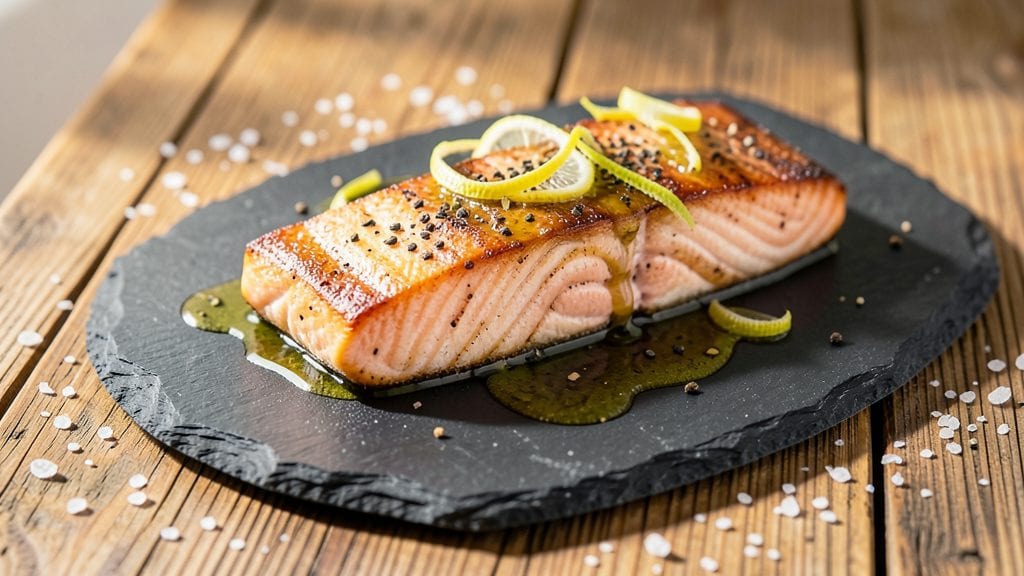
This baked salmon steak recipe delivers crispy skin and flaky centers in just 20 minutes, proving restaurant-quality results are well within reach at home. I perfected this method after years of testing—too many salmon fillets ended up dry or soggy before I cracked the code.
The secret lies in precise seasoning and high-heat baking, which transforms simple ingredients into a dish that feels luxurious yet remains effortless.
What sets this recipe apart is the foolproof technique that ensures perfect texture every time. You’ll start with a dry-brine method to lock in moisture, then finish with a quick broil to create that coveted crispy crust.
The flavor profile balances bright lemon, aromatic herbs, and a touch of smoky paprika, creating a harmonious blend that complements the natural richness of the salmon.
By the time your oven timer goes off, you’ll have golden, crispy skin that shatters at the touch and tender, flaky flesh that melts in your mouth. This recipe serves two generously, making it ideal for a quick weeknight dinner or a light yet satisfying meal for two.
The simplicity of the ingredients doesn’t compromise on flavor—just fresh salmon, basic pantry staples, and a method that guarantees success.
Pair it with a fresh salad, roasted asparagus, or a drizzle of homemade dill sauce to elevate the dish further. The versatility of this recipe means it works equally well as a standalone meal or alongside other proteins for a balanced menu.
Let’s get started on creating your perfect baked salmon steak.
Ingredients for baked salmon steak
Precision-crafted ingredients for restaurant-quality salmon with perfect crispy skin and flaky centers.
| Ingredient | Amount | Notes |
|---|---|---|
| Center-Cut Atlantic Salmon Steaks 🐟 | 2 whole | 6-8 oz each, skin-on preferred |
| Kosher Salt 🧂 | 1 ½ tbsp | Diamond Crystal preferred for precision |
| Freshly Ground Black Pepper 🌶️ | ½ tsp | Coarsely cracked for texture |
| Extra-Virgin Olive Oil 🫒 | 1 tbsp | High smoke point, fruity variety |
| Fresh Lemon Zest 🍋 | 1 tbsp | From 1 organic lemon, finely grated |
| Fresh Lemon Juice 🍋 | 2 tbsp | Freshly squeezed, no pulp |
| Smoked Paprika 🌶️ | ½ tsp | Spanish pimentón for authentic depth |
| Fresh Dill Sprigs 🌿 | 4 whole | Curly stems removed, loosely packed |
| Garlic Cloves 🧄 | 2 cloves | Thinly sliced, not minced |
| Unsalted European-Style Butter 🧈 | 2 tbsp | 85% fat content for optimal crisp |
| Freshly Cracked Ice ❄️ | ½ cup | For dry-brine bath |
The salmon selection is critical—center-cut steaks with intact skin ensure even cooking and that coveted crisp. Whole Foods Market and Trader Joe's consistently carry high-quality, sustainably sourced Atlantic salmon. Look for steaks with vibrant pink flesh and minimal bruising; the skin should be smooth and unbroken. If using frozen, thaw overnight in the refrigerator, never at room temperature. The dry-brine technique requires Diamond Crystal kosher salt for its coarse texture, which clings better to the salmon's surface than table salt. For optimal results, source your smoked paprika from Penzeys Spices—their Spanish pimentón delivers authentic depth of flavor that generic supermarket brands can't match.
No smoked paprika? Substitute with a pinch of liquid smoke plus an extra pinch of sweet paprika for a similar smoky profile. Fresh dill can be swapped for 1 tablespoon dried dill at one-third the amount, though fresh provides superior aroma. If you're short on time, pre-sliced garlic from a jar works, though freshly sliced garlic cloves release more flavor. The lemon should be organic when possible—conventional lemons often have thicker skins that yield less zest. For the butter, European-style brands like Plugrá or President melt more cleanly than American butter, creating a superior crisp. The ice in the dry-brine bath can be substituted with frozen peas if you're in a pinch, though it won't chill as effectively.
Store fresh salmon in an airtight container on ice for up to 2 days before cooking. The dry-brine mixture can be prepared 1 day ahead and stored in the refrigerator. Once cooked, leftovers keep for 2 days in the fridge, though the texture degrades after the first day. For longer storage, wrap individual portions in parchment paper and freeze for up to 3 months. Reheat gently in a skillet with a splash of water to restore moisture. This recipe pairs beautifully with roasted Brussels sprouts or a simple arugula salad dressed with the same lemon-herb vinaigrette.
Why You'll Love This Recipe
- Foolproof Timing: I swear by this recipe because it’s done when you are—no guessing. Twenty minutes in a hot oven, and those salmon steaks flake apart with the lightest touch. Honestly, the only thing I’ve burned is my own patience waiting for the timer.
- Zesty Magic: That bright lemon zest? It’s the secret weapon. The olive oil keeps it rich while the citrus cuts through the richness—like a little burst of sunshine on your plate. Between us, I’ve tried fancy marinades, but this combo is my go-to.
- Weeknight Hero: I make this when I’m too tired for fussing but still want something impressive. Serve it with roasted potatoes or a simple salad, and suddenly dinner feels like a restaurant meal. (Yes, even on a Tuesday night.)
- Budget-Friendly Luxury: Center-cut salmon steaks might sound fancy, but they’re my affordable way to feel fancy. A single pan, minimal ingredients, and leftovers reheat beautifully—no sad, dry fish here. My wallet and taste buds both win.
Step-by-step instructions for baked salmon steak with perfectly crispy skin
This method delivers restaurant-quality results with minimal effort and maximum flavor.
Create the Dry-Brine and Prep the Salmon
In a shallow dish large enough to hold the salmon steaks, combine the 0.5 cup freshly cracked ice with the 1.5 tablespoons kosher salt and 0.5 teaspoon freshly ground black pepper. Stir just until the salt dissolves—this creates a dry brine that will season deeply and help create that coveted crispy skin. Place the salmon steaks skin-side down in the brine mixture, ensuring they're fully submerged.
Let them sit at room temperature for 10 minutes while you prepare the remaining ingredients. This brief dry-brine bath works like a magic trick—it seasons the fish thoroughly and helps the skin render fat beautifully during cooking. I always use Diamond Crystal kosher salt for this step because its larger crystals dissolve more evenly than table salt.
Prepare the Flavor Base and Season the Salmon
In a small bowl, combine the 2 tablespoons unsalted European-style butter (softened but not melted), 1 tablespoon extra-virgin olive oil, 1 tablespoon fresh lemon zest, 2 tablespoons fresh lemon juice, 0.5 teaspoon smoked paprika, and the 2 thinly sliced garlic cloves. Mix well until fully incorporated—this creates a vibrant, aromatic compound butter that will infuse the salmon with bright, Mediterranean flavors.
Remove the salmon from the brine and gently pat dry with paper towels, being careful not to tear the delicate skin. Rub the skin-side of each steak with half of the butter mixture, pressing gently so it adheres. Then, place the 4 fresh dill sprigs on top of each steak, arranging them like a cross. The dill will release its essential oils during baking, adding fresh herbal notes that complement the rich salmon flavor.
Preheat and Prepare the Baking Surface
Preheat your oven to 425°F with a rack positioned in the middle position. This high temperature is crucial for achieving that perfect crispy skin while keeping the centers tender. Place a wire rack on a rimmed baking sheet—this allows hot air to circulate underneath the salmon, ensuring even cooking on all surfaces.
Line the rack with a piece of parchment paper (cut to fit) and place the seasoned salmon steaks on top, skin-side up. The parchment prevents the butter from sticking to the rack while still allowing for excellent heat transfer. I like to use a wire rack because it creates a slight gap between the salmon and the baking sheet, which helps render fat more effectively for that coveted crispy texture.
Bake to Crispy Perfection
Bake the salmon for 12-14 minutes until the skin is deep golden brown and crispy to the touch, and the internal temperature reaches 130°F when measured with an instant-read thermometer. The skin should release easily from the steak when you gently lift an edge with a fish spatula—this is your visual cue that it's perfectly crisped.
Here's the thing—don't overcook it. Salmon continues cooking slightly after you remove it from the oven, and you want that center to remain tender and flaky. If you're unsure, err on the side of slightly undercooked rather than overdone. The moment the skin reaches that deep golden color, it's time to remove it from the oven. Let the salmon rest for 3 minutes before serving to allow the juices to redistribute.
Plate and Serve Immediately
Using a fish spatula, carefully transfer the salmon to serving plates, skin-side up. Spoon any remaining butter mixture from the baking sheet over the top of each steak, allowing it to drizzle down the sides. The contrast of crispy skin and tender flesh is what makes this dish truly special—each bite should deliver that satisfying crunch followed by melt-in-your-mouth flakiness.
Garnish with any remaining dill sprigs and serve immediately while the skin is still crisp. The lemon zest and juice in the butter mixture will brighten the natural richness of the salmon, creating a perfect balance of flavors. This method consistently delivers that elusive combination of crispy skin and flaky centers that makes baked salmon so satisfying.
Pro Tips For Making Baked Salmon Steak
- Preheat Like It’s Hot: Crank your oven to 425°F (220°C) and let it scream for 10-15 minutes before adding the salmon—no half-measures. I used to slide the steaks in cold, thinking "it’ll heat up," but that’s how you end up with sad, gray centers. The first 5 minutes at full blast build that perfect crust while keeping the inside tender.
- Dry the Skin First: Pat those salmon steaks thoroughly with paper towels—even the skin—until they’re bone-dry. The skin won’t crisp if it’s damp, and that’s where all the flavor hides. I learned this after serving a batch where the skin stuck like sad wallpaper. (Yes, I’ve been there.)
- Salt Before Oil: Season the salmon with salt before drizzling olive oil—let it sit 10 minutes uncovered on a plate. The salt draws out moisture, which evaporates, creating a better crust when the oil hits. I was skeptical until I tried it; now I never skip it.
- Lemon Zest Last: Add the lemon zest in the final 2 minutes of baking—just sprinkle it on top like confetti. If you zest too early, the citrus oils cook off and lose their bright punch. (Pro move: zest a whole lemon, but only use half; save the rest for garnish or cocktails.)
Flavor customization for baked salmon steak
Citrus Brightness Boost
Swap the lemon for orange zest and juice (from 1 large orange) to add a tropical twist. The natural sweetness of orange pairs beautifully with salmon, especially when balanced with ½ teaspoon ground turmeric for warmth.
I like to add 1 teaspoon grated ginger to the butter mixture for an extra layer of complexity. 🍊
Herb Variations
Replace dill with thyme sprigs for an earthy, slightly floral note that works wonderfully with the smoky paprika. For a Mediterranean vibe, use fresh oregano leaves instead—they add a peppery kick that stands up to the richness of the salmon.
I also love adding ½ teaspoon crushed fennel seeds to the butter mixture for a licorice-like depth.
Spicy Kick Options
For heat lovers, add ½ teaspoon cayenne pepper to the butter mixture or sprinkle 1 teaspoon chili flakes on top before baking. If you prefer a smoky heat, mix ½ teaspoon chipotle powder with the smoked paprika.
I often finish with a squeeze of lime juice and a sprinkle of tajín for a bright, zesty contrast.
Sweet and Savory Fusion
Balance the richness with a touch of sweetness by adding 1 teaspoon honey to the butter mixture or drizzling 1 tablespoon maple syrup over the salmon in the last 2 minutes of baking.
For a caramelized finish, sprinkle with ½ teaspoon cinnamon and a pinch of sea salt before serving. This works surprisingly well with the smoky paprika.
Umami Depth Additions
Enhance the savory profile with 1 teaspoon fish sauce or ½ teaspoon soy sauce in the butter mixture. For a deeper umami punch, add 1 tablespoon finely chopped shallots or 1 teaspoon miso paste to the marinade.
I also love adding ½ teaspoon nori flakes on top before baking for a subtle oceanic note.
Global Flavor Twists
For a Japanese-inspired version, swap smoked paprika for 1 teaspoon furikake seasoning and top with sesame seeds and a drizzle of ponzu sauce after baking. A Greek twist involves adding ½ teaspoon dried oregano and finishing with kalamata olives and a sprinkle of feta crumbles**.
Both variations elevate the dish with bold, international flavors. 🌍
Nutrition facts
Frequently asked questions
Why does the recipe call for a dry-brine with ice?
The ice creates a cold, concentrated salt solution that seasons the salmon deeply while helping the skin render fat more effectively during baking. This method ensures maximum crispiness without overcooking the delicate flesh. The cold also helps stabilize the salmon's proteins for a firmer texture.
Can I use frozen salmon steaks in this recipe?
Yes, but thaw them overnight in the refrigerator—never at room temperature. Pat the steaks completely dry before seasoning to prevent steam from forming during baking, which can make the skin soggy. The dry-brine method still works perfectly with properly thawed frozen salmon.
How do I know when the salmon is perfectly cooked?
Look for deep golden-brown skin that's crispy to the touch and an internal temperature of 130°F when measured with an instant-read thermometer. The skin should release easily from the flesh with a gentle spatula lift. Overcooking by even 1 minute can turn flaky centers rubbery.
What's the best way to store leftovers?
Wrap individual portions in parchment paper and refrigerate for up to 2 days. For longer storage, freeze for 3 months. Reheat gently in a skillet with a splash of water to restore moisture—microwaving can make the skin rubbery. The texture degrades after the first day, so enjoy fresh whenever possible.
Can I make this recipe in a toaster oven?
Preheat your toaster oven to 425°F and use the same baking time (12-14 minutes). Place the salmon on a wire rack over a baking sheet to allow proper air circulation. The smaller capacity may require slightly closer monitoring for even cooking.