Appetizers
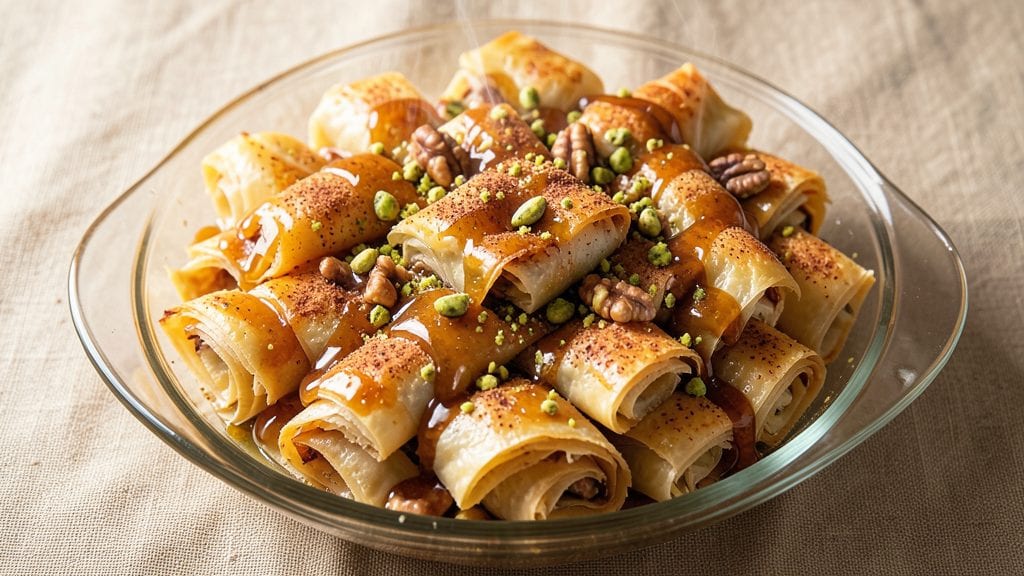
This rolled baklava recipe delivers the perfect balance of crispy phyllo layers and nutty, honey-drenched sweetness that makes every bite irresistible. The secret lies in precise layering and baking techniques that create flaky, golden sheets with a texture that shatters at the touch.
I developed this method after years of testing—no more soggy centers or uneven browning.
What sets this recipe apart is the foolproof rolled technique, where phyllo sheets wrap around a nut filling before baking, ensuring each piece has that signature baklava texture.
The honey syrup, simmered to a perfect consistency, soaks into the layers just enough to keep them moist without overwhelming the nuts. Whether you prefer pistachios or walnuts, this method adapts seamlessly while maintaining that authentic baklava experience.
By the time you cut into your first piece, you’ll be rewarded with crispy, flaky layers that give way to a rich, nutty filling—all held together by a glossy honey drizzle. The aroma alone will have everyone gathering around your table, and the taste?
Pure, golden bliss. This is baklava that rivals even the best from Mediterranean bakeries, and it starts with just a few key techniques.
Ready to impress? We’ll cover everything from phyllo prep to cutting and baking, plus variations to customize it to your taste. Let’s get started—your kitchen is about to smell like heaven.
Ingredients for rolled baklava
Twenty-four crispy layers of phyllo perfection await—just these ingredients transform into baklava that rivals Mediterranean bakeries.
| Ingredient | Amount | Notes |
|---|---|---|
| Phyllo Dough Sheets 🍞 | 24 sheets | Store-bought or homemade, thawed |
| Pistachios 🥜 | 2 cups | Shelled, unsalted, roughly chopped |
| Walnuts 🥜 | 1 cup | Chopped, or substitute pistachios |
| Unsalted Butter 🧈 | 1 cup | Melted, full-fat for richness |
| Granulated Sugar 🍬 | 1 ½ cups | For nut filling, plus syrup |
| Ground Cinnamon 🌿 | 1 tbsp | For nut filling flavor |
| Vanilla Extract 🥛 | 1 tsp | Pure, high-quality preferred |
| Honey 🍯 | 1 ½ cups | Thick, clover or wildflower |
| Orange Juice 🍊 | ½ cup | Freshly squeezed, for syrup |
| Orange Zest 🍊 | 1 tsp | For bright citrus flavor |
| Salt 🧂 | ¼ tsp | Fine sea salt for balance |
| Water 💧 | ½ cup | For syrup consistency |
Phyllo sheets are the backbone—Filomena or Fillo Works are my go-tos, but any brand works if they're fresh. Keep them covered with a damp towel to prevent drying. The nuts? Pistachios or walnuts both shine, but for that signature green hue, pistachios are a must. Chop them yourself (food processor or knife) for even texture. Costco usually has bulk nuts at great prices, and I always grab extra for snacking. Toast the nuts lightly before mixing—their flavor pops more after a quick 5-minute bake in a dry pan.
No pistachios? Almonds or pecans work in a pinch, but the texture shifts slightly. The honey matters too—thick, clover honey gives the best consistency, but wildflower or orange blossom add lovely depth. Short on time? Store-bought honey syrup (like the kind in Middle Eastern markets) can replace the homemade version, though I’d still simmer it with orange zest for brightness. And if you’re feeling fancy, swap the vanilla for a cinnamon stick while simmering the syrup—infuses beautifully.
This syrup keeps for 2 weeks in the fridge, so make extra. The assembled baklava stays crispy for 3 days if stored in an airtight container—slice it before serving, though. For freezing, wrap individual pieces in parchment and freeze for up to 2 months. Reheat at 350°F for 5 minutes to restore that golden crunch. Pro tip: Brush the top phyllo sheet with melted butter before baking—it’s worth the extra minute for that restaurant-quality shine.
Why You'll Love This Recipe
- No Fuss Assembly: I swear by this method—just butter, roll, repeat. No fussy lattice patterns or shaky hands trying to layer sheets perfectly. The secret’s in brushing each phyllo with melted butter before rolling; it stays crisp without the stress.
- Crunchy-Creamy Magic: That first bite? Pure contrast—crispy layers give way to gooey nuts and honey. Pistachios add a buttery richness, while walnuts bring earthy crunch. Honestly, it’s the kind of dessert that makes people pause mid-bite.
- Party in a Box: Make a big batch ahead—it’s my go-to for potlucks, holidays, or just because. Slice it thin, pack it in a tin, and watch it disappear. (Yes, even at my in-laws’ Thanksgiving.)
- Leftovers That Last: This stuff keeps for weeks in the fridge, and reheats beautifully. I’ll be real: I’ve had it cold, warmed, and even as a snack straight from the pantry. Budget-friendly? Absolutely. Worth the wait? Always.
Step-by-step instructions for rolled baklava
Here's how to create layers of crispy phyllo perfection with a nutty, honey-drenched finish every time.
Prepare the Nut Filling
In a large mixing bowl, combine the 2 cups pistachios, 1 cup walnuts, 1.5 cups granulated sugar, 1 tablespoon ground cinnamon, 1 teaspoon vanilla extract, and 0.25 teaspoon salt. I like to use my hands for this part—rubbing the nuts between your palms helps break them down into smaller pieces while distributing the sugar and spices evenly.
Once everything is thoroughly mixed, transfer the nut mixture to a food processor. Pulse in short bursts until the nuts are finely chopped but not turned into a paste—you want texture, not smoothness. The filling should resemble coarse sand when you press it between your fingers. This texture is crucial for that perfect bite in each piece of baklava.
Assemble the Phyllo Layers
Preheat your oven to 350°F. Line two 9x13-inch baking pans with parchment paper, leaving an overhang on the sides for easy lifting later. Melt the 1 cup unsalted butter and brush a thin, even layer over the bottom of one pan. This butter will create a barrier between the phyllo and the pan, preventing sticking and ensuring crispiness.
Working quickly (phyllo dries out fast!), carefully layer all 24 sheets of phyllo dough in the pan. I find it easiest to stack them in overlapping thirds, brushing each sheet with melted butter as I go. The butter should be warm but not dripping—just enough to coat the phyllo lightly. Spread the nut mixture evenly over the top layer of phyllo, leaving a ½-inch border around the edges. This border will help hold everything together when we roll it up.
Roll and Cut the Baklava
Here's where the magic happens: roll the phyllo tightly into a log, using the parchment overhang to help lift and maneuver. I like to use a kitchen towel to grip the parchment without tearing it. Once rolled, transfer the log to the second prepared pan. Repeat the butter brushing and rolling process with the remaining phyllo and nut mixture, creating a second identical log in the second pan.
Cut each log into 24 equal pieces (12 pieces per pan) using a sharp knife. For clean cuts, press down firmly and wipe the knife between cuts to remove any stuck nuts. Arrange the pieces closely together in the pans, leaving no gaps. This tight arrangement ensures maximum crispiness as the butter renders and the phyllo layers crisp up.
Bake Until Golden
Bake the baklava for 45-50 minutes until the edges are deep golden brown and the phyllo layers look crisp all the way through. I know it's tempting to open the oven early, but resist! The baklava needs that full baking time to develop the perfect texture. If the top isn't browning quickly enough, tent the pans with foil for the last 10 minutes to prevent over-browning while still allowing the bottom to crisp.
When the baklava is done, it should pull away from the pan easily when you lift a corner of the parchment. If it sticks, bake for another 5 minutes. The layers should be crisp but not brittle, and the nuts should be golden throughout. Let the baklava cool completely in the pans—this prevents the honey from pooling on top when you pour it.
Create the Honey Syrup
While the baklava is cooling, prepare the honey syrup in a saucepan. Combine the 1.5 cups honey, 0.5 cup orange juice, 1 teaspoon orange zest, and 0.5 cup water. Bring to a gentle boil over medium heat, then reduce to a simmer and cook for 10-12 minutes until slightly thickened. You'll know it's ready when it coats the back of a spoon but isn't syrupy enough to drip slowly.
Strain the syrup through a fine-mesh sieve to remove any orange zest bits, then let it cool for 5 minutes. The syrup should be warm but not hot when you pour it over the baklava—this helps it soak in evenly without making the phyllo soggy. Pour the syrup slowly and evenly over the cooled baklava, letting it absorb completely. For extra shine, you can drizzle a little more syrup on top after it's fully soaked.
Pro Tips For Making Rolled Baklava
- Brush Butter Lightly: DESCRIPTION: Use just enough melted butter to glaze the phyllo—not drown it. I learned this the hard way after a soggy first attempt; aim for a thin, even coat that lets the layers crisp properly without turning greasy.
- Toast Nuts Low and Slow: DESCRIPTION: Spread pistachios and walnuts in a single layer on a baking sheet and toast at 300°F (150°C) for 8–10 minutes, stirring halfway. High heat burns them faster than you can blink, and you want nutty flavor, not smoke.
- Keep Phyllo Covered: DESCRIPTION: Stack uncut phyllo sheets between damp towels or plastic wrap before rolling—this prevents them from drying out while you layer. I used to skip this and ended up with brittle sheets that cracked mid-roll.
- Roll Tight, Then Loosen: DESCRIPTION: Press the first few layers firmly to create a tight cylinder, then ease up on pressure as you roll to avoid crushing the filling. The outer layers should hold shape, but the center stays fluffy—this keeps the baklava from turning into a dense brick.
Make-ahead tips for rolled baklava
Prep Ahead Timeline
Start your prep 24 hours ahead to make the most of this recipe’s make-ahead potential. The nut filling can be mixed and stored in an airtight container in the fridge overnight—this lets the flavors meld beautifully.
I like to chop the nuts the night before and toast them briefly the next morning for maximum freshness. 💫
Phyllo Prep Shortcut
Thaw your phyllo sheets overnight in the fridge if using store-bought. I keep them wrapped in a damp kitchen towel inside a plastic bag to prevent drying. This step is non-negotiable—dry phyllo becomes brittle and cracks during rolling.
If you’re short on time, purchase pre-thawed phyllo from brands like Filomena, which are ready to use straight from the package.
Honey Syrup Make-Ahead
The honey syrup can be made 3 days in advance and stored in a sealed jar in the fridge. When you’re ready to assemble, simply reheat it gently on the stove until warm (about 2 minutes over low heat).
This prepped syrup ensures you’re not scrambling last-minute while your baklava cools. The citrus notes actually intensify after resting, adding extra brightness to each bite.
Assemble the Day Of
Roll and cut the baklava 4 hours before serving—this gives the phyllo time to crisp fully without becoming overly dry. Store the assembled (but unbaked) logs in the fridge until you’re ready to bake.
When baking day arrives, simply preheat the oven and bake straight from the fridge for that perfect golden finish. The cold start helps prevent premature browning while ensuring even cooking.
Storage Hacks
Once fully baked and cooled, store your baklava in an airtight container at room temperature for 3 days—it keeps beautifully without losing crispness. For longer storage, freeze individual pieces wrapped in parchment paper for up to 2 months.
To reheat, bake at 350°F for 5 minutes until the edges are crisp again. This method preserves that shatter-prone texture perfectly. 🔥
Serving Prep
Slice your baklava just before serving to maintain maximum crispness. Arrange pieces on a platter and drizzle with extra syrup while still warm for that signature glossy finish. I like to serve it with a side of Greek yogurt or clotted cream for dipping—it cuts through the sweetness beautifully.
For a festive touch, garnish with crushed pistachios or a sprinkle of cinnamon right before serving.
Nutrition facts
Frequently asked questions
Why does my rolled baklava turn out soggy instead of crispy?
The most common cause is underbaking or pouring hot syrup over warm baklava. Let the baklava cool completely before adding syrup—this prevents the phyllo from absorbing too much moisture at once. Also, bake until golden brown (45-50 minutes at 350°F) and avoid opening the oven early to trap steam.
Can I substitute honey with another sweetener?
While traditional recipes use honey for its unique flavor, you can substitute with equal parts maple syrup or agave for a vegan option. For a lighter texture, reduce the syrup by 2 tablespoons to prevent excess moisture. The citrus notes (orange juice/zest) still brighten the flavor beautifully.
How do I prevent the phyllo from cracking when rolling?
Keep phyllo sheets covered with a damp towel at all times to maintain flexibility. Brush each layer with warm (not hot) melted butter—this creates a cohesive seal. Work quickly in a warm kitchen (70°F+) and avoid overlapping edges too tightly when rolling. A gentle, even pressure prevents snapping.
What’s the best way to store leftover baklava?
Store in an airtight container at room temperature for 3 days maximum to preserve crispness. For longer storage, freeze individual pieces wrapped in parchment for up to 2 months. Reheat at 350°F for 5 minutes to restore crispness—microwaving makes it rubbery.
Can I make this recipe without a food processor?
Pulse nuts in a powerful blender or chop them finely by hand with a knife. For even texture, toast nuts first in a dry pan for 5 minutes—this makes them easier to break down. Just ensure they’re finely chopped (like coarse sand) to mimic the food processor’s consistency.