Desserts
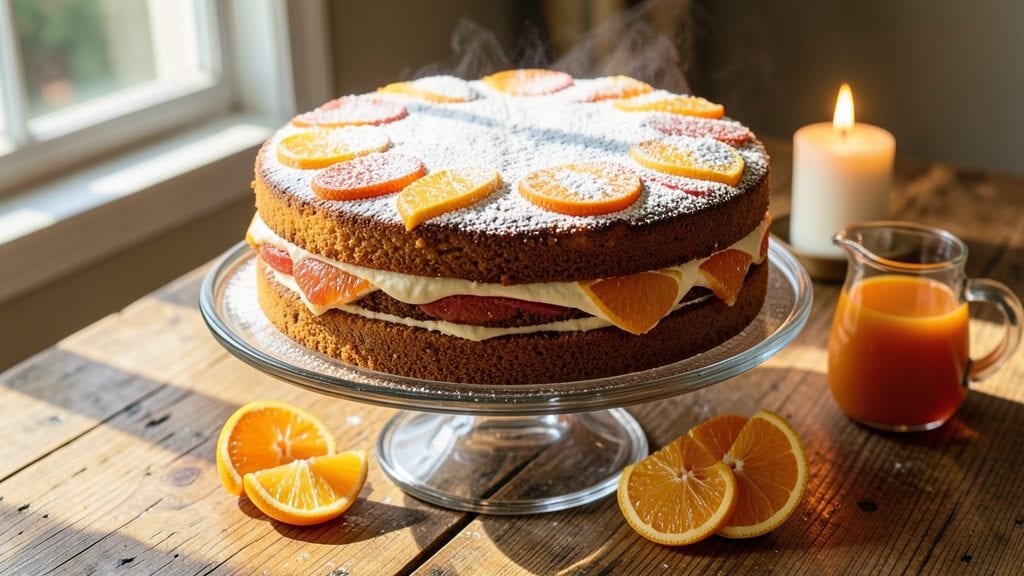
This grandma's orange cake recipe brings back memories of Sunday afternoons spent in warm kitchens, where the scent of citrus and vanilla filled the air.
The secret to its legendary moistness lies in a simple technique—folding whipped egg whites into the batter at the very end, ensuring tender layers that stay fresh for days.
I first learned this recipe from my grandmother, who swore by the combination of fresh orange zest and juice, balanced perfectly with butter and sugar.
The cake itself is straightforward but requires patience—350°F for 35-40 minutes—until a toothpick comes out clean. What sets it apart is the zesty orange glaze, made with powdered sugar and just enough orange juice to create a glossy finish that brightens every slice.
The flavors are bright yet comforting, with just the right amount of citrus to cut through the richness of the butter.
By the time you pull it from the oven, you'll have a cake that's moist and tender with a subtle orange aroma that fills your kitchen. Serve it warm with a dollop of whipped cream or a cup of Earl Grey tea for the full experience.
This isn't just a dessert—it's a piece of tradition, perfected over generations and now ready to become your own family heirloom.
Whether you're baking for a special occasion or simply craving a taste of nostalgia, this recipe delivers restaurant-quality results with minimal effort. The beauty of grandma's methods is their simplicity—no fancy equipment, just love and a few key techniques. Let's get baking!
Ingredients for grandma's orange cake
Simple pantry staples and fresh citrus transform into grandma’s legendary orange cake.
| Ingredient | Amount | Notes |
|---|---|---|
| All-Purpose Flour 🌾 | 2 ½ cups | Sifted for lightness |
| Granulated Sugar 🍚 | 2 cups | White or light brown |
| Unsalted Butter 🧈 | 1 cup | Cold, cubed, full-fat |
| Large Eggs 🥚 | 4 whole | Room temperature |
| Orange Zest 🍊 | 2 tbsp | Fresh, finely grated |
| Fresh Orange Juice 🍊 | ¾ cup | From 2-3 oranges |
| Pure Vanilla Extract 🌸 | 2 tsp | Bottled, high-quality |
| Baking Powder 🧂 | 2 tsp | Freshly opened |
| Salt 🧂 | ½ tsp | Fine sea salt |
| Large Egg Whites 🥚 | 4 whole | Room temperature |
| Powdered Sugar 🍚 | 2 cups | For glaze |
| Earl Grey Tea ☕ | 1 tbsp | Loose-leaf, steeped |
The butter and sugar start this cake’s magic—use cold, cubed butter for tender layers, not melted. King Arthur or Gold Medal flour work best for that perfect crumb. For the orange zest, grab bright, thick-skinned oranges like Navel or Valencia—the more vibrant the color, the better the flavor. Fresh orange juice is non-negotiable; bottled lacks the bright acidity. My grandma always used ReaLemon juice when fresh wasn’t available—it’s the closest you’ll get to homemade. The vanilla extract? Nothing imitation here—splurge on a bottle from McCormick or Nielsen-Massey.
No fresh oranges? Substitute with bottled orange juice, but add 1 extra tbsp of zest to compensate. Short on powdered sugar for the glaze? Granulated sugar works in a pinch, but it’ll be grainier. The Earl Grey tea in the glaze adds depth—if you’re out, regular black tea steeped and strained does the trick. For the egg whites, make sure they’re completely free of yolk—even a tiny bit will deflate them. And if you’re baking in a humid climate, reduce the baking powder by 0.25 tsp to prevent a domed cake.
This cake keeps beautifully—3 days at room temperature in an airtight container, or 1 week refrigerated. For longer storage, slice and freeze portions for up to 3 months. The glaze sets quickly, so assemble the cake right before serving. I always bake mine in a 9x13-inch pan for easy cutting, but a 9-inch round works too. Leftovers? Toasted with a little butter taste even better the next day.
Why You'll Love This Recipe
- No-Fuss Mixing: This cake comes together faster than you can zest an orange. Just cream butter and sugar, toss in eggs, fold in flour—no sifting, no fuss. My hands are sticky, but the bowl’s empty in 10 minutes.
- Zesty Magic: That bright orange zest? It’s the secret weapon. The citrus cuts through the richness of the butter, giving you a moist crumb with a finish that’s like a sunshine hug. Honestly, I’ve tried store-bought orange cakes—nothing compares.
- Birthday to Brunch: Slice it for a celebration or pack it for lunch. The dense texture holds up to frosting (trust me, I’ve tested it) or stays naked for a simple, elegant dessert. My kids ask for it at school parties, and my book club requests it for meetings—proof it’s a crowd-pleaser.
- Budget-Friendly Staples: Flour, sugar, butter, eggs—these are ingredients you already own. No specialty items, no last-minute grocery runs. And leftovers? They last a week in the fridge, so you’re not scrambling to bake again. (Yes, even on a Tuesday night.)
Step-by-step instructions for grandma's orange cake
Here's how to bake layers so tender they melt in your mouth, with that signature orange brightness.
Prepare the Earl Grey Tea Infusion
Start by steeping the 1 tablespoon Earl Grey tea in ½ cup freshly boiled water for 5 minutes. Let it cool completely before straining out the tea leaves. This subtle floral note complements the orange perfectly—don't skip it, even though it's just a small amount. The infusion will replace some of the orange juice in the batter, adding depth without overpowering.
While the tea cools, measure out the 2 cups granulated sugar and 2.5 cups all-purpose flour (sifted) into separate bowls. Sifting the flour ensures light, airy layers that rise beautifully. Keep these ready—you'll need them quickly once the wet ingredients come together.
Cream Butter and Sugar for Maximum Moisture
In a stand mixer fitted with the paddle attachment, beat the 1 cup cold, cubed unsalted butter and 2 cups granulated sugar on medium speed for 3-4 minutes. You're looking for a pale, fluffy mixture that nearly doubles in volume—this incorporates air that helps create that signature tender crumb. Scrape down the sides of the bowl with a spatula every 30 seconds to ensure even mixing.
Add the 4 whole large eggs, one at a time, mixing well after each addition. Then stir in the 2 tablespoons orange zest and 2 teaspoons pure vanilla extract. The zest should be finely grated—no visible pith—and the vanilla adds warmth that balances the citrus. Mix until fully combined, about 1 minute total. This is where the magic happens—the citrus oils infuse into the butter mixture, promising that bright orange flavor throughout every bite.
Alternate Dry Ingredients with Juice for Even Moisture
With the mixer on low speed, add ⅓ of the sifted all-purpose flour to the butter mixture. Mix just until combined, then pour in ½ of the Earl Grey tea infusion (about ¼ cup). Repeat this process—flour, then liquid—two more times, ending with the final ⅓ of flour. This alternating method creates layers so moist they stay tender for days.
In a separate bowl, whisk together the 2 teaspoons baking powder and ½ teaspoon salt. Gently fold this mixture into the batter using a spatula, being careful not to overmix. The batter should be thick but pourable. If it looks too stiff, add 1-2 tablespoons of the orange juice to loosen it slightly. This step ensures your cake rises properly without developing a tough texture.
Bake in Two Layers for Perfect Height
Preheat your oven to 350°F and grease two 8-inch round cake pans (or line with parchment circles). Divide the batter evenly between the pans. Tap each pan firmly on the counter 3-4 times to remove any air bubbles—this prevents doming and gives you that classic even-topped cake.
Bake for 25-30 minutes, or until a toothpick inserted in the center comes out clean (not wet with batter). The edges should be light golden brown, but don't overbake—this cake relies on moisture, not dryness. Rotate the pans halfway through baking for even heat distribution. Let the cakes cool in the pans for 10 minutes, then transfer to a wire rack to cool completely before assembling.
Whip Egg Whites and Assemble with Glaze
While the cakes cool, beat the 4 large egg whites in a clean bowl until soft peaks form. Gradually add the 2 cups powdered sugar, beating on high speed until the meringue is stiff and glossy—this should take about 3-4 minutes. Spread ½ of the meringue between the two cake layers, then place the second layer on top. Cover the entire cake with the remaining meringue, smoothing the top with a spatula.
For the glaze, whisk together ½ cup of the remaining Earl Grey tea infusion (about ¼ cup) with 1 cup powdered sugar until smooth. Drizzle generously over the top and sides of the cake. The glaze should be thick enough to hold its shape but thin enough to drip slightly—this creates that signature "Grandma's touch" shine. Let the glaze set for 30 minutes before slicing. The result? Layers so moist they'll make you close your eyes in bliss, with every bite bursting with orange and tea-infused sweetness.
Pro Tips For Making Grandma'S Orange Cake
- Whisk Butter & Sugar Longer: I used to give it 30 seconds, but this cake needs a full 3-4 minutes until it’s pale and fluffy—no streaks of butter left. That’s when the air gets trapped right, making the texture light instead of dense. (Yes, even if you’re impatient like me.)
- Sift the Flour Twice: Orange zest is tiny, and if you don’t sift the flour first, those little specks will clump and give you a grainy texture. Do it once before mixing, then sift again right before folding it in—sounds obsessive, but it’s the thing that matters most.
- Don’t Overmix the Batter: After burning three batches of this cake, I finally figured out: mix the wet ingredients until just combined, then fold in the dry ingredients in two additions. Overmixing = tough cake. Stop when there’s one streak of flour left—your future self will thank you.
- Use Room-Temp Eggs: Cold eggs curdle the butter, and that’s when the cake turns out greasy instead of tender. Let them sit in warm water for 10 minutes if you’re in a rush, but ideally, take them out of the fridge 30 minutes ahead. (Your grandma probably did this without knowing why—it just works.)
Essential equipment for this dish
Stand Mixer Essentials
Your stand mixer is the workhorse of this recipe—KitchenAid Artisan or Cuisinart Premium models handle the job perfectly. The paddle attachment is critical for creaming butter and sugar properly, while the whisk attachment transforms egg whites into fluffy meringue.
I recommend using a 5-quart bowl to accommodate all ingredients without overflowing. 💡
Precision Measuring Tools
Accurate measurements are non-negotiable for this cake. Invest in a digital kitchen scale for flour and sugar—OXO Good Grips is my go-to brand. For liquids, use a clear glass measuring cup with marked increments.
The orange zest requires a microplane grater (like BergHOFF) to avoid any bitter pith. Precision here ensures consistent results every time.
Two 8-Inch Cake Pans
Use non-stick cake pans for easy release, or line regular pans with parchment circles. I prefer Wilton Perfect Results pans—they distribute heat evenly and prevent sticking. If you only have one pan, bake in stages but don't overcrowd your oven.
For even baking, place pans on the middle rack and rotate halfway through.
Fine-Mesh Sieve
A fine-mesh sieve (like OXO Good Grips) is essential for sifting flour, which prevents lumps and creates light, airy layers. I also use it to strain the Earl Grey tea infusion, removing any lingering tea leaves that could make the cake bitter.
This small tool makes a big difference in texture and flavor.
Offset Spatula
An offset spatula (I use Wilton) is perfect for spreading meringue between layers and smoothing the final glaze. Its flexible blade helps create clean edges and an even surface. For the glaze, I dip the spatula in warm water occasionally to prevent sugar from sticking.
Pastry Brush
A silicon pastry brush (like OXO Good Grips) comes in handy for brushing any crumbs from the cake layers before adding meringue. It also helps distribute the glaze evenly without tearing the cake. Keep one dedicated to cake work to avoid cross-contamination with savory dishes.
Nutrition facts
Frequently asked questions
Why does this cake need both orange zest and juice?
The zest provides the bright citrus aroma and essential oils that give the cake its signature flavor, while the juice adds moisture and balances sweetness. Together, they create that perfect orange-forward taste without being overpowering. The zest should be finely grated—no visible pith!
Can I make this cake in a 9x13-inch pan instead of two layers?
Yes! Simply bake the entire batter in a 9x13-inch pan for 35-40 minutes at 350°F. Skip the meringue layer and top with the glaze directly. This version works great for sheet cakes or easy serving. The texture will still be moist, just in one big slice!
What if my cake turns out dry?
Dryness usually means overbaking or using old baking powder. Always check with a toothpick—it should come out with moist crumbs, not clean. For extra moisture, brush warm cake layers with simple syrup (equal parts sugar and water, heated until dissolved) before adding glaze.
How do I store leftovers?
Keep the cake in an airtight container at room temperature for 3 days, or refrigerate for up to 1 week. For longer storage, slice and freeze portions for 3 months. Thaw at room temperature before serving—no microwave needed!
Can I substitute Earl Grey tea with something else?
Use black tea (like English Breakfast) or even chamomile for a milder flavor. Just steep 1 tbsp in ½ cup hot water and strain. The tea adds depth—if you skip it, the cake will still be delicious, just more citrus-forward.