Appetizers
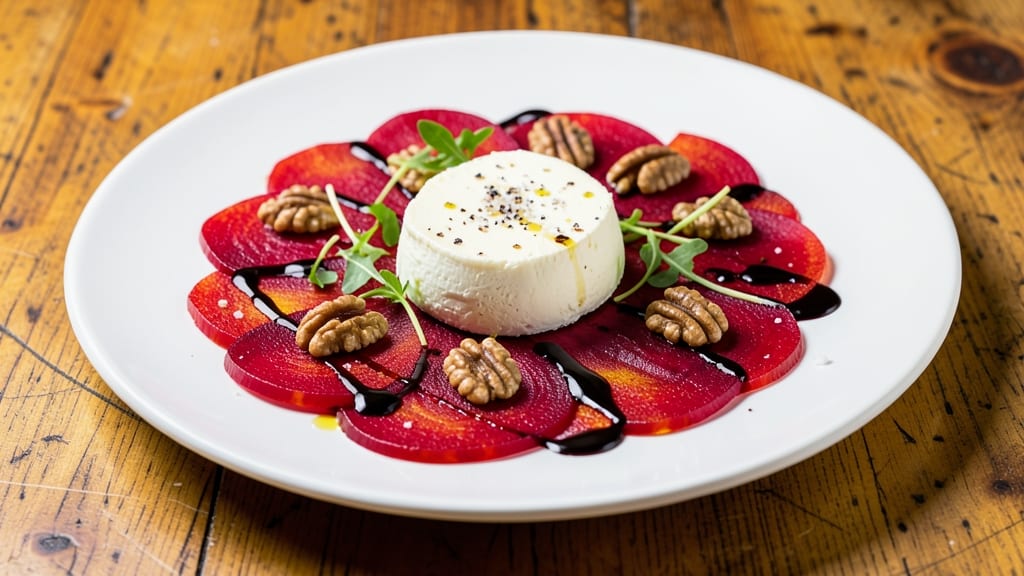
This beet carpaccio with goat cheese transforms humble beets into a restaurant-worthy appetizer that balances earthy sweetness with creamy richness. The secret lies in achieving paper-thin slices—so delicate they practically dissolve on your tongue—paired with crumbled goat cheese that adds a velvety contrast.
I’ve perfected this dish after years of experimenting with beet preparation and plating techniques that elevate it from simple salad to showstopping starter.
The beauty of beet carpaccio is its simplicity: no cooking required, just precise slicing and thoughtful assembly.
You’ll need a sharp knife (or mandoline for consistency) to create those signature ribbons, plus a few complementary ingredients—walnuts for crunch, microgreens for freshness, and a drizzle of balsamic reduction to tie everything together.
The goat cheese isn’t just an addition; it’s the star that transforms this dish from ordinary to extraordinary with its tangy creaminess.
What you’ll end up with is a visually stunning plate that’s as impressive as it is delicious—vibrant pink beet ribbons arranged artfully, topped with crumbly goat cheese and garnished with textural contrasts.
The combination of sweet beets and creamy cheese creates a flavor profile that’s both sophisticated and approachable, perfect for impressing guests or treating yourself to something special. Every bite delivers that perfect balance of textures and flavors.
This dish works equally well as an elegant appetizer for dinner parties or a sophisticated lunch option. The recipe scales effortlessly, and the components can be prepped ahead, making it ideal for entertaining.
Let’s get started on creating this visually stunning and flavorful beet carpaccio that’s sure to become a favorite.
Ingredients for beet carpaccio with goat cheese
Nine ingredients transform humble beets into a visually stunning, creamy, restaurant-worthy appetizer.
| Ingredient | Amount | Notes |
|---|---|---|
| Medium Beets 🍠 | 2 whole | Cooked, peeled, chilled |
| Extra-Virgin Olive Oil 🫒 | ¼ cup | High quality, fruity |
| Goat Cheese 🧀 | 8 oz | Creamy, crumbled fresh |
| Walnuts 🥜 | ½ cup | Toasted, roughly chopped |
| Microgreens 🌱 | ¼ cup | Mixed variety for garnish |
| Balsamic Reduction 🍷 | ¼ cup | Homemade or quality store-bought |
| Honey 🍯 | 1 tbsp | For drizzling |
| Diamond Crystal Kosher Salt 🧂 | ½ tsp | Fine grain for seasoning |
| Freshly Ground Black Pepper 🌶️ | ¼ tsp | Freshly cracked |
| Lemon Zest 🍋 | 1 tsp | From organic lemon |
| Fresh Thyme Leaves 🌿 | 6 whole | Chopped, for garnish |
The beets are the foundation, so choose deep magenta varieties like Chioggia or Golden for their vibrant color and sweetness. Whole Foods or local farmers markets often carry the best quality—look for firm, unblemished roots. Roast them whole until tender (about 45 minutes at 400°F), then peel and chill before slicing. The goat cheese should be creamy and tangy—I prefer La Tourangelle or Murray's for their rich texture. Toast the walnuts in a dry skillet for 3-4 minutes until fragrant, then chop coarsely. Microgreens add that final pop of freshness—sprouted broccoli or pea shoots work beautifully.
No walnuts? Pecans or candied pecans offer a similar crunch, though walnuts' earthiness pairs best with beets. Short on balsamic reduction? Simmer 1/2 cup balsamic vinegar until reduced by half—takes about 10 minutes. The honey should be raw, local honey if possible, but any variety works. Fresh thyme is ideal, but dried thyme at half the amount suffices in a pinch. For extra flair, swap microgreens for edible flowers like nasturtiums. The lemon zest brightens everything—don’t skip it, even if it’s just a sprinkle.
Prep ahead to save time: roast and peel beets 1 day in advance, store covered in the fridge. Toasted walnuts keep for 1 week in an airtight container. Assemble plates just before serving to maintain crispness. This dish holds beautifully for 4 hours in the fridge—perfect for entertaining. Garnish with thyme leaves and a final drizzle of honey right before serving for that restaurant-worthy touch.
Why You'll Love This Recipe
- No Mandoline Needed: I’ll admit, I don’t own one of those fancy slicers—and this still looks restaurant-worthy. Just use a sharp knife and steady hands to slice the beets paper-thin. The effort pays off in those jewel-like layers that stack like edible art.
- Earthy Creamy Magic: That tangy goat cheese melts into the beets like a dream, while the walnuts add crunch. Drizzle with good olive oil, and suddenly you’ve got a flavor party—sweet, salty, nutty, and herby all at once.
- Weeknight to Dinner Party: Honestly, this is my go-to when I need something impressive but not labor-intensive. Serve it on a platter for guests or wrap it in a tortilla for a quick lunch. The same ingredients work both ways.
- Leftovers? Not a Problem: Between us, I’ve made this twice and never had leftovers—but if you do, toss them in a salad or blend into a dip. The beets keep well, and the goat cheese adds richness without breaking the bank. Win-win.
Step-by-step instructions for beet carpaccio with goat cheese
Transform humble beets into an elegant, creamy masterpiece with this refined technique.
Prepare the Beets for Slicing
Begin with the 2 whole medium beets you've already cooked, peeled, and chilled. The key to perfect carpaccio lies in achieving paper-thin, uniform slices. I use a sharp mandoline set to the thinnest setting for consistent results—never thicker than 1/16 inch. Place each slice on a clean kitchen towel and gently pat dry with another towel to remove excess moisture.
Arrange the slices in overlapping rows on a large serving platter, creating a visually striking pattern. The chilled beets will hold their shape beautifully, and the overlapping technique mimics traditional carpaccio presentation. Work quickly to prevent the beets from warming up, which would make them softer and less elegant.
Create the Creamy Goat Cheese Mixture
In a small mixing bowl, combine the 8 oz of creamy goat cheese with 1 tablespoon of honey, 1 teaspoon of lemon zest, and 0.25 teaspoon of freshly ground black pepper. Using a fork, gently fold these ingredients together until just combined—you want to maintain the goat cheese's natural texture rather than overmix it into a paste.
This mixture should be thick but spreadable, with visible flecks of thyme and lemon zest throughout. The honey adds subtle sweetness that balances the earthy beets, while the lemon zest brightens the entire dish. If the mixture feels too thick, add 1 teaspoon of the extra-virgin olive oil to help it spread more easily across the beets.
Assemble the Carpaccio with Creamy Elements
Using the back of a spoon or an offset spatula, spread the goat cheese mixture evenly over the arranged beet slices. I like to work in small sections to ensure complete coverage without disturbing the delicate beet layers. The mixture should create a luscious, creamy blanket that contrasts beautifully with the firm beets.
Next, sprinkle the toasted walnuts evenly over the goat cheese layer. The 0.5 cup of roughly chopped walnuts add a satisfying crunch and nutty depth that complements the creamy texture. Press them gently into the cheese so they adhere well and don't shift when serving. This step is where the dish truly comes together—each bite should offer that perfect contrast of textures.
Finish with Flavorful Garnishes
Drizzle the 0.25 cup of balsamic reduction in an artistic zigzag pattern over the walnuts. The reduction should coat the walnuts lightly without pooling on the beets. Follow this with the 0.25 cup of microgreens, scattered delicately over the entire platter. These fresh greens add a vibrant pop of color and a subtle peppery freshness that cuts through the richness.
Finally, sprinkle the chopped fresh thyme leaves and remaining 0.5 teaspoon of diamond crystal kosher salt evenly over the entire dish. The thyme adds an aromatic herbal note, while the salt enhances all the flavors. Let the carpaccio rest for 5 minutes before serving to allow the flavors to meld together. The result should be a harmonious balance of creamy, crunchy, and fresh elements in every bite.
Pro Tips For Making Beet Carpaccio With Goat Cheese
- Roast Beets Cold: DESCRIPTION: I learned this the hard way—roasting beets in their skins at 400°F (200°C) for 45-50 minutes gives them that perfect tender, jammy texture. If you’re impatient and boil them, they’ll turn mushy when sliced thin for carpaccio. Trust the oven—it’s the only way to get that clean, bright flavor.
- Dry Sliced Beets: DESCRIPTION: Pat those thin beet slices with a paper towel right after slicing. Wet beets slide around on the plate and dilute the olive oil’s richness. A quick dry with a towel keeps them crisp enough to hold their shape and soak up the dressing properly.
- Toast Walnuts Low: DESCRIPTION: Skip the high-heat pan toasting—it burns them faster than you can blink. Instead, spread walnuts on a baking sheet at 325°F (160°C) for 8-10 minutes, stirring once. They’ll stay fragrant and crunchy without turning bitter, and you won’t be stuck with a smoky kitchen.
- Crumble Cheese Fresh: DESCRIPTION: Don’t use pre-shredded goat cheese—it’s packed with anti-caking agents that make it grainy and dry. Instead, crumble a log of fresh goat cheese by hand right before assembling. It’ll melt slightly into the beets, creating pockets of tangy creaminess instead of a clumpy topping.
Serving suggestions for leftovers
Plating for Maximum Impact
Use a large, shallow platter with a neutral background to let the vibrant pink beets shine. Arrange the beet slices in overlapping concentric circles starting from the center—this creates visual depth and mimics traditional carpaccio presentation.
For an extra touch, lightly press the edges of each slice with your fingers to create subtle waves before arranging. 💫
Portioning for Sharing
This dish serves 4 as an appetizer, so divide into 4 elegant portions using a small offset spatula to lift sections cleanly. For individual servings, arrange on small slate boards or white ceramic plates to highlight the colors.
I like to serve with mini spoons for easy scooping of the creamy goat cheese mixture.
Wine Pairing Perfection
A crisp Pinot Noir from Oregon or a dry Riesling from Germany complements the earthy beets and creamy cheese beautifully. The acidity in these wines cuts through the richness while enhancing the dish's natural sweetness. For a non-alcoholic option, sparkling water with lemon keeps the palate fresh between bites. 🍷
Seasonal Garnish Swaps
Spring: Replace walnuts with toasted almonds and add edible violets for a floral touch. Summer: Swap microgreens for cherry tomatoes and drizzle with balsamic glaze.
Fall: Use pecans instead of walnuts and garnish with rosemary sprigs. Winter: Add crispy shallots and a sprinkle of sea salt flakes for extra warmth.
Serving Temperature
Serve beet carpaccio chilled to maintain the delicate texture of the raw beet slices. If the room is warm, place the platter on a bed of ice for 10 minutes before serving.
The cold temperature also helps the goat cheese hold its shape better. Never serve warm—it will make the beets soggy and lose their elegant presentation. ❄️
Accompaniment Ideas
Pair with crusty sourdough bread for dipping into any leftover goat cheese mixture. For a lighter option, serve with arugula salad dressed in lemon vinaigrette. The peppery greens balance the sweetness of the beets perfectly.
I also recommend offering extra balsamic reduction on the side for guests who want to drizzle more.
Nutrition facts
Frequently asked questions
Can I use raw beets instead of cooked ones for carpaccio?
No, you should always use cooked beets for this recipe. Raw beets are too hard and bitter to enjoy in thin slices. Roasting or boiling them first brings out their natural sweetness and tenderizes them perfectly for delicate slicing. Cooked beets also hold their shape better when arranged for plating.
How do I achieve perfectly even beet slices?
Use a sharp mandoline slicer set to 1/16-inch thickness for the most consistent results. If you don't have one, a very sharp chef's knife and steady hand work too—just keep your slices uniform. Always slice against the grain for flexibility. Chill the beets first to make them firmer and easier to handle.
What if I don't have goat cheese? Can I substitute?
Yes! You can use feta cheese (crumbled) or ricotta mixed with lemon zest for a similar creamy texture. For a dairy-free option, try mashed avocado with a pinch of salt. Just note that goat cheese's tangy flavor is key to balancing the sweet beets—substitutes may alter the taste profile slightly.
How far ahead can I prepare this dish?
Roast and peel the beets 1 day ahead and store them covered in the fridge. Toast the walnuts and make the balsamic reduction in advance too. Assemble the platter just before serving to keep everything crisp. The goat cheese mixture should be made fresh to maintain its creamy texture.
Can I make this dish without balsamic reduction?
Skip the reduction and use extra-virgin olive oil drizzled with flaky sea salt instead. For sweetness, add a touch of honey or maple syrup to the goat cheese mixture. The dish will still be delicious—it just loses that beautiful glossy finish.