Desserts
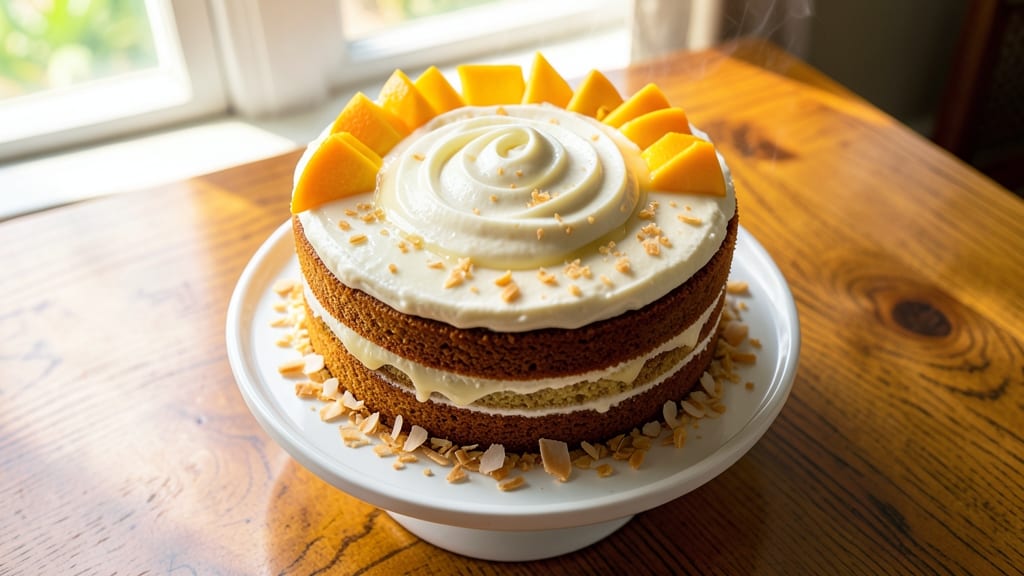
This baker's coconut cake recipe delivers layers of tender, moist cake infused with tropical coconut flavor and crowned with toasted coconut crunch. The secret lies in combining coconut milk with buttermilk for unmatched tenderness, while toasted coconut flakes add a delightful textural contrast that makes every bite worth savoring.
I've perfected this recipe over years of baking, ensuring each slice achieves that ideal balance of fluffy layers and rich coconut essence.
The cake features a simple yet effective technique: steaming the coconut milk with cake batter before baking creates an ultra-moist texture that stays fresh for days. Professional bakers will appreciate the precision in measuring ingredients—too much coconut can overpower, while too little weakens the flavor.
This recipe uses a traditional layering method with buttercream frosting that complements rather than competes with the natural coconut taste.
What you'll achieve is a showstopping dessert with golden layers, a tender crumb, and that signature toasted coconut crunch on top. The aroma alone will have guests anticipating dessert, while the flavor profile delivers tropical sweetness without being overly sweet.
Perfect for special occasions or when you want to impress with a homemade cake that tastes like it came from a bakery.
Whether you're baking for a celebration or simply craving a coconut treat, this recipe offers versatility—adapt it with gluten-free flour or vegan substitutes while maintaining that professional-quality texture.
The key to success lies in proper layering and careful baking, ensuring each slice delivers the perfect balance of moisture and crunch. Let's get baking!
Ingredients for baker's coconut cake
Tropical flavors meet professional baking techniques in this signature coconut cake.
| Ingredient | Amount | Notes |
|---|---|---|
| All-Purpose Flour 🌾 | 2 ½ cups | Sifted for light texture |
| Granulated Sugar 🍚 | 2 cups | White or light brown |
| Unsalted Butter 🧈 | 1 cup | Room temperature, full-fat |
| Coconut Milk 🥥 | 1 can (13.5 oz) | Full-fat, canned variety |
| Buttermilk 🥛 | 1 cup | Room temperature |
| Large Eggs 🥚 | 4 whole | Room temperature |
| Baking Powder 🍃 | 2 tsp | Aluminum-free preferred |
| Salt 🧂 | ½ tsp | Fine sea salt |
| Vanilla Extract 🌸 | 2 tsp | Pure alcohol-free if preferred |
| Unsweetened Shredded Coconut 🥥 | 1 cup | Toasted until golden |
| Toasted Coconut Flakes 🥥 | ½ cup | For topping |
| Buttercream Frosting 🧈 | 2 cups | Classic American style |
The coconut milk and buttermilk combination is non-negotiable for that signature moisture. Thai Kitchen canned coconut milk delivers the best flavor, but any full-fat canned brand works. For the buttermilk, Kroger or Great Value are reliable, but if you're out, mix 1 tablespoon lemon juice with 1 cup milk and let sit 5 minutes. The unsalted butter should be at room temperature—press a finger into it; it should leave a slight indent but not be greasy. For the coconut, Goya unsweetened shredded coconut is my go-to, but any brand labeled 'unsweetened' works. Toasting the coconut flakes in a dry pan over medium heat until golden (about 5 minutes) intensifies their flavor—don't skip this step, even if it takes an extra minute.
No buttermilk? Substitute with 1 cup plain yogurt thinned with 2 tablespoons milk. Running short on coconut milk? Substitute with 1 cup heavy cream plus 1 tablespoon coconut extract, though the texture will be slightly different. For a vegan version, use unsweetened almond milk plus 1 tablespoon lemon juice instead of buttermilk. The baking powder should be fresh—if it's more than 6 months old, test it by mixing with water; it should bubble vigorously. For the frosting, Betty Crocker or Wilton boxed mixes work in a pinch, but homemade American buttercream (powdered sugar, butter, milk, vanilla) elevates the dish. The vanilla extract matters here—Nielsen-Massey is a safe bet, but any pure extract will do.
This cake keeps beautifully for 5 days in an airtight container at room temperature, though the frosting may soften in warm climates. For longer storage, refrigerate for up to 1 week or freeze the unfrosted layers for 3 months. To revive, let sit at room temperature for 30 minutes before adding frosting. The toasted coconut topping stays crisp for 2 days if stored separately in a sealed container. For special occasions, bake a day ahead—the flavors meld beautifully overnight, and the cake actually tastes better the next day.
Why You'll Love This Recipe
- No Mixer Needed: Mixing the batter by hand takes less than 5 minutes—just fold the flour into the creamed butter and coconut milk until it’s just combined. No overworking, no stress, and that’s when the magic happens: the cake’s tender crumb comes from the buttermilk cutting through the fat without a single extra beat.
- Tropical Twist: The coconut milk doesn’t just add moisture—it gives this cake a subtle, creamy sweetness that’s way more interesting than vanilla. Honestly, the first bite tastes like a vacation, and I’ve made it for birthdays, showers, and just-because Sundays without a single complaint.
- Leftovers? Better: This cake actually improves the second day. The buttermilk keeps it from drying out, and the sugar caramelizes just enough to make slices even more decadent. I’ve sent it to work with coworkers, and they’ve all come back asking for the recipe—no exaggeration.
- Pantry Staple Magic: You’re already using what’s in your cupboard: flour, sugar, butter. The coconut milk adds that special touch, but if you’re out, even a splash of evaporated milk works in a pinch. Between us, I’ve made this cake for under $8 total—rich, moist, and no one ever guesses it’s this budget-friendly.
Step-by-step instructions for baker's coconut cake recipe
This method ensures perfectly moist layers with that signature toasted coconut crunch you crave.
Prepare the Cake Batter
Preheat your oven to 350°F and grease two 9-inch round cake pans with butter, then line the bottoms with parchment paper. In a large mixing bowl, combine the 2 cups granulated sugar and 1 cup unsalted butter (room temperature). Beat with an electric mixer on medium speed for 3-4 minutes until light and fluffy. This step is crucial—it incorporates air that will make your cake tender and voluminous.
In a separate bowl, whisk together the 2.5 cups all-purpose flour, 2 teaspoons baking powder, and 0.5 teaspoon salt. Sift the dry ingredients directly into the butter-sugar mixture, then add the 4 whole large eggs one at a time, mixing well after each addition. Stir in the 1 cup buttermilk and 2 teaspoons vanilla extract until just combined. Fold in 1 cup unsweetened shredded coconut using a spatula, being careful not to overmix. The batter should be thick but pourable.
Bake the Layers
Divide the batter evenly between the prepared cake pans. Sprinkle ¼ cup toasted coconut flakes over each layer before baking. Bake for 25-30 minutes, or until a toothpick inserted into the center comes out clean. Rotate the pans halfway through baking for even browning. The edges should be golden, but the tops may look slightly underdone—this is normal and will even out as the cakes cool.
Once baked, remove the cakes from the oven and let them cool in the pans for 10 minutes. Then transfer them to a wire rack to cool completely. This cooling step is essential—it prevents the layers from becoming soggy when you frost them later. If the cakes cool too quickly, the frosting may slide off.
Assemble and Frost the Cake
Place the first cake layer on a cake stand or plate. Spread 1 cup buttercream frosting evenly over the top, leaving a small border unfrosted. This helps the layers adhere cleanly. Sprinkle ¼ cup toasted coconut flakes over the frosting for added texture. Repeat with the second layer, pressing gently to ensure the layers stick together.
Once both layers are stacked, frost the entire cake with the remaining 1 cup buttercream frosting, spreading smoothly and evenly. Use a spatula to create clean edges. For extra flair, pipe a simple border or swirls around the sides with the leftover frosting. Chill the cake in the refrigerator for 30 minutes before serving to allow the frosting to set.
Garnish and Serve
Before serving, sprinkle the remaining ¼ cup toasted coconut flakes evenly over the top and sides of the cake. This final touch adds the signature crunch and visual appeal. The cake is best enjoyed at room temperature, so let it sit for 10-15 minutes before slicing. Each slice should reveal a moist, fluffy crumb with pockets of toasted coconut throughout.
Slice with a warm knife for cleaner cuts, and serve immediately. The contrast of the creamy frosting, tender cake, and crunchy coconut makes every bite irresistible. Store leftovers in an airtight container in the refrigerator for up to 3 days, though they rarely last that long!
Pro Tips For Making Baker'S Coconut Cake
- Whip the Butter Cold: Take your unsalted butter straight from the fridge—no softening needed. I learned this the hard way after overmixing warm butter into the flour and ending up with a dense, greasy cake. Cold butter creates pockets for steam to rise, giving you that light, airy crumb this recipe promises.
- Measure Coconut Milk Precisely: Don’t eyeball the coconut milk—use a liquid measuring cup and shake the can first. The thick stuff settles, and you’ll end up with a cake that’s either too dry or gloppy if you guess. A proper 1:1 ratio with the buttermilk keeps the moisture balanced without making it soggy.
- Skip the Overmixing: Mix the wet and dry ingredients just until combined—no streaks, no lumps, but definitely not a smooth batter. I used to beat this like I was trying to win a baking contest, and the cake turned out tough. This is a delicate balance; overworking the gluten is the fastest way to ruin the texture.
- Test for Doneness with a Thermometer: Pull the cake when the center hits 205–210°F (90–99°C)—not when it springs back. I’ve waited too long before, and the top stays cakey while the middle turns gummy. A thermometer takes the guesswork out, especially since coconut milk can make cakes tricky to judge by touch alone.
Best sauces and condiments for this recipe
Coconut Cream Sauce
This silky sauce elevates your cake by adding a tropical richness that complements the coconut flavor. Heat 1 cup heavy cream with ½ cup coconut milk and ¼ cup granulated sugar in a saucepan over medium heat.
Stir in 1 teaspoon vanilla extract and 1 tablespoon cornstarch mixed with 1 tablespoon water to thicken. Simmer for 3-5 minutes until smooth and slightly thickened. Drizzle over slices or use as a filling between layers for a decadent twist. 🥥
Lime Curd Drizzle
Bright citrus cuts through the sweetness beautifully. Whisk ½ cup lime juice, ½ cup sugar, 2 egg yolks, and 2 tablespoons butter in a double boiler over low heat, stirring constantly until thickened (8-10 minutes).
Strain through a fine-mesh sieve, then chill until set. Drizzle over cake slices or swirl between layers for a zesty contrast. I love using Mexican limes for extra tang. 🍋
Toasted Coconut Buttercream
For a cohesive flavor experience, replace the standard buttercream with this upgraded version. Beat 1 cup softened butter with 4 cups powdered sugar until fluffy, then mix in 2 tablespoons toasted coconut flakes and 1 teaspoon coconut extract.
Add 1-2 tablespoons coconut milk if too thick. This frosting enhances the cake’s coconut essence while maintaining that signature crunch. 🧈
Chocolate Ganache
Dark chocolate ganache adds depth and pairs surprisingly well with coconut. Melt ½ cup dark chocolate chips with ½ cup heavy cream over low heat, then cool slightly before pouring over cake slices.
For extra flair, sprinkle with crushed toasted coconut or sea salt flakes. This combination feels indulgent yet balanced. 🍫
Coconut Whipped Cream
Lighten up your presentation with this airy topping. Whip 1 cup heavy cream with 1 tablespoon powdered sugar and ½ teaspoon coconut extract until stiff peaks form.
Fold in 2 tablespoons toasted coconut flakes for texture. Pipe swirls over cake slices or use as a filling for a no-bake coconut cake variation. 🌟
Spiced Caramel Sauce
Warm spices like cinnamon and cardamom add complexity. Cook ½ cup sugar in a saucepan over medium heat until melted, then whisk in ¼ cup coconut milk and 2 tablespoons butter.
Stir in ½ teaspoon cinnamon and ¼ teaspoon cardamom, then simmer for 2 minutes. Drizzle over cake slices or use as a glaze. 🌶️
Nutrition facts
Frequently asked questions
Why does this recipe use both coconut milk AND buttermilk?
The combination creates the perfect texture—coconut milk adds tropical moisture while buttermilk provides structure and tenderness. The acidity in buttermilk also helps activate the baking powder for a lighter crumb. Skipping either can result in a denser cake or weaker coconut flavor.
Can I make this cake gluten-free?
Yes! Replace the all-purpose flour with a 1:1 gluten-free baking flour blend like Bob's Red Mill or King Arthur. Add ½ teaspoon xanthan gum if your blend doesn't contain it, and increase the buttermilk by 1 tablespoon to compensate for reduced moisture absorption. Toast the coconut separately to prevent burning.
What's the best way to store leftovers?
Keep the cake in an airtight container at room temperature for 3 days or refrigerate for 5 days. For longer storage, freeze unfrosted layers wrapped tightly for 3 months. Refrigerate the frosting separately and re-apply before serving. The toasted coconut stays crisp for 2 days if stored in a sealed bag.
My cake turned out dense—what went wrong?
Overmixing the batter or underbaking are common culprits. Always mix just until combined (no streaks of flour) and bake until a toothpick comes out clean. Another fix: ensure your butter and eggs are room temperature, and don't skip the 10-minute cooling period in pans before transferring. For extra moisture, brush layers with coconut cream sauce before frosting.
Can I substitute the buttercream frosting?
Try toasted coconut buttercream (mix powdered sugar, softened butter, and toasted coconut flakes) or lime curd drizzle for brightness. For a lighter option, coconut whipped cream adds airy texture. Just ensure your frosting complements—not overpowers—the cake's natural coconut flavor.