
Side Dishes
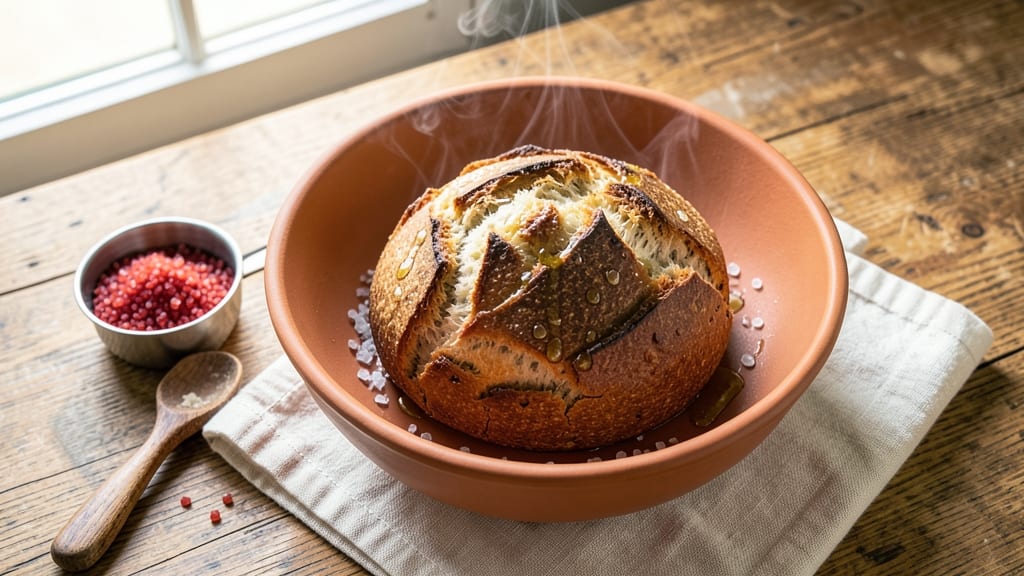
This awesome bread recipe delivers a crispy golden crust like bakery loaves, all with just 10 minutes of hands-on time. The secret lies in a slow fermentation process that develops deep flavor and an open crumb structure—no kneading required.
I perfected this technique after years of experimenting with Dutch oven baking, and it consistently produces bread with a satisfying crunch and tender interior. What makes it truly awesome is how foolproof it is: no special equipment beyond a large mixing bowl and oven-safe pot.
The beauty of this method is in its simplicity—just flour, water, yeast, and salt combine to create something extraordinary. The dough rests overnight in the refrigerator, allowing gluten to develop naturally without your effort.
When baked in a Dutch oven, the steam creates that signature crackly crust while keeping the interior moist and airy. This recipe transforms basic pantry ingredients into a loaf that tastes like it came from a professional bakery.
By the time you pull it from the oven, you'll have a loaf with a crispy golden crust that snaps audibly and a soft, open crumb that's perfect for sandwiches or toast. The flavor is rich and slightly tangy from the long fermentation, with just the right amount of chewiness.
This bread stays fresh for days when stored properly, making it ideal for meal prep or gifting. Let's get started on creating your perfect loaf.
Whether you're a beginner baker or a seasoned pro, this recipe delivers consistent results every time. The Dutch oven method ensures even heat distribution, while the overnight rest develops flavors that store-bought bread can't match.
You'll be amazed at how simple ingredients can create such a remarkable loaf—all with minimal effort. Ready to bake bread that will impress everyone at the table?
Ingredients for awesome bread
Four simple ingredients transform into restaurant-quality bread with minimal effort.
| Ingredient | Amount | Notes |
|---|---|---|
| All-Purpose Flour 🌾 | 4 cups | Plus 2 tbsp for dusting bowl |
| Active Dry Yeast 🍞 | ¼ tsp | Or 1 packet instant yeast |
| Granulated Sugar 🍚 | ½ tsp | Feeds the yeast |
| Diamond Crystal Kosher Salt 🧂 | 1 ½ tsp | Adjust to taste |
| Warm Water 💧 | 1 ½ cups | 110°F for optimal yeast activation |
| Extra-Virgin Olive Oil 🫒 | ¼ cup | For dough enrichment |
| Cornmeal 🌽 | ½ cup | For Dutch oven preparation |
| Ice Water ❄️ | ¼ cup | For dough shaping |
The yeast and sugar are your flavor catalysts—King Arthur or Bob's Red Mill yeast works best here. Diamond Crystal kosher salt is preferred because it dissolves completely, but Morton's works too. Warm water should feel like bathwater (110°F)—too hot kills yeast, too cold makes it sluggish. Store-bought flour is fine, but bread flour yields a slightly better crumb. For the olive oil, California brands like Bertolli add subtle fruity notes that elevate the final loaf. The cornmeal isn't just for dusting—it creates a crispy barrier between the dough and Dutch oven, ensuring that signature crackly crust.
No yeast? Instant yeast works at the same ratio, but proofing may take slightly longer. Substitute sugar with honey or maple syrup (same amount) for a subtle sweetness. Whole wheat flour can replace up to 20% of all-purpose, but expect a denser crumb. The olive oil can be swapped for melted butter (same quantity) for richer flavor. For the Dutch oven prep, rice flour works as a cornmeal substitute if you're avoiding gluten. If your kitchen runs hot, chill the dough for 10 minutes before baking to prevent over-rising.
Freshly baked bread reheats best in a 350°F oven for 5-10 minutes to restore crispness. Store wrapped at room temperature for 2-3 days, or freeze for up to 3 months by wrapping tightly in plastic. Portion into slices before freezing for easy toasting. The overnight cold proof develops maximum flavor—never skip it. For gift-giving, bake in a loaf pan instead of Dutch oven for easier transport. The crust stays crisp for 48 hours when properly stored, making it perfect for meal prep.
Why You'll Love This Recipe
- Five-Ingredient Magic: I swear, this bread only needs flour, yeast, sugar, salt, and water—nothing fancy. The yeast does all the heavy lifting while I mix in my pajamas.
- Crust That Cracks: Between us, that golden crust with the soft, pillowy inside? It’s the kind of texture that makes you pause mid-bite. The kosher salt and sugar balance just right—no overpowering, just pure, satisfying bread flavor.
- Weeknight Wonder: I’ve used this dough for sandwiches, toast, and even garlic bread (just add butter and herbs). It’s my go-to when I need something quick but still feels like a treat.
- Lasts All Week: Honestly, I’ve had this bread for four days straight—still fresh, still delicious. The yeast’s slow rise means it stays soft longer, and the simple ingredients keep costs low. Win-win.
Step-by-step instructions for no-knead Wonder with crispy golden crust
Here's the method for achieving that perfect crust and tender crumb every time.
Activate the Yeast and Mix the Dough
In a large bowl, combine the 1.5 cups warm water with the 0.5 tsp granulated sugar and 0.25 tsp active dry yeast. Let it sit for 5-10 minutes until the mixture becomes frothy and bubbly—this confirms the yeast is active. If it doesn't bubble, your yeast may be dead, and you'll need to start over.
Once the yeast is active, add the 4 cups all-purpose flour and 1.5 tsp diamond crystal kosher salt to the bowl. Stir with a wooden spoon until a shaggy dough forms. Then pour in the 0.25 cup extra-virgin olive oil and mix until fully incorporated. The dough will be sticky but cohesive—this is normal for no-knead bread.
Rest the Dough for Even Development
Cover the bowl with plastic wrap or a damp towel and let the dough rest at room temperature for 12-18 hours. This long fermentation develops deep flavor and a light, airy crumb. I like to place the bowl in a slightly warm spot, like near the oven with the light on, to encourage activity without overproofing.
After resting, the dough should have risen noticeably and look puffy. If it hasn't risen much, it may need a few more hours—don't rush this step. The dough should be soft and slightly sticky but not liquidy. This resting period is what creates that signature no-knead texture.
Shape and Prepare for Baking
Lightly dust a surface with 2 tbsp all-purpose flour (from the ingredients list) and turn out the dough. Gently shape it into a round loaf by folding the edges toward the center. Wet your hands slightly to prevent sticking, and shape it into a smooth, compact ball. Place it seam-side up in a bowl.
Cover the dough again and refrigerate for 1-2 hours. This chilling step firms up the dough slightly, making it easier to handle and preventing excessive spreading in the oven. While it chills, preheat your oven to 450°F and place a 5-quart Dutch oven (or heavy oven-safe pot) inside for 30 minutes to get it piping hot.
Create Steam and Bake for Crispy Crust
Remove the hot Dutch oven from the oven and carefully transfer the dough (using a well-floured towel) into the pot. Sprinkle 0.5 cup cornmeal evenly over the dough—this creates a crispy, golden crust. Immediately cover the pot with the lid and return it to the oven.
Bake for 30 minutes covered, then remove the lid and bake for another 15-20 minutes until the crust is deep golden brown and the internal temperature reaches 205-210°F. The bread is done when it sounds hollow when tapped on the bottom. Let it cool in the pot for 10 minutes before transferring to a wire rack.
Finish with Ice Water for Extra Crisp
Once the bread has cooled slightly, brush the top with 0.25 cup ice water using a pastry brush. This creates a glossy, crispy crust. Let the bread cool completely before slicing—this ensures clean cuts and prevents a gummy interior. The crust should be crispy and golden, while the interior remains soft and airy.
Slice and serve warm for the best texture. This bread keeps well at room temperature for 2-3 days or can be frozen for up to 3 months. The longer it sits, the more flavor develops, making it perfect for sandwiches or toast.
Pro Tips For Making Awesome Bread
- Bloom the Yeast First: Skip mixing yeast straight into dry flour—dissolve it in warm water (110°F) with sugar first and let it sit for 5-10 minutes until frothy. This guarantees active yeast before it hits the dough, saving you from a flat, sad loaf later. (Yes, even if you’re impatient like me.)
- Measure Salt Precisely: Diamond Crystal kosher salt is not the same as table salt—use the recipe’s exact amount (usually 1-2 teaspoons) by weight if possible. Too little flattens the bread; too much kills the yeast. I learned this the hard way after tossing in a "handful" and ending up with a brick.
- Knead Until Silky: Stop when the dough springs back slowly after poking it (about 8-10 minutes by hand). Over-kneading makes gluten tough, and under-kneading leaves it gummy. Stretch it gently—if it resists like taffy, you’re golden. (Your arms will thank you later.)
- Use a Thermometer for Water: Warm water should be 110°F—not boiling, not lukewarm. Too hot kills yeast; too cold makes it sluggish. I was skeptical until I tried it: the dough rises faster and tastes lighter. (Sounds weird, but it works.)
Perfect pairings for awesome bread
Buttery Spreads
Nothing complements this crust better than a rich cultured butter like Plugrá or Kerrygold. Spread a generous layer on warm slices for a luxurious touch.
For extra flavor, mix in 1 tsp honey or 2 tbsp jam—I love blackberry or fig jam with the nutty undertones of this bread. The butter melts beautifully into the open crumb, creating a decadent bite. 🧈
Sweet Toppings
Freshly baked bread pairs perfectly with homemade jam or nutella. Try peach jam for a summery twist or spiced apple butter in fall. For a gourmet touch, drizzle with dark chocolate ganache—melt ½ cup dark chocolate with ¼ cup heavy cream and let it cool slightly before pouring.
The contrast of crisp crust and smooth chocolate is unbeatable. 🍫
Cheese Pairings
This bread excels with sharp cheeses like aged cheddar or blue cheese. Create a simple charcuterie board with smoked gouda, prosciutto, and dried apricots for a sweet-savory balance.
For a melted option, stuff slices with mozzarella and sun-dried tomatoes, then broil for 3-5 minutes until bubbly. The crust holds up perfectly to melting cheese. 🧀
Savory Dips
Warm garlic aioli or whipped feta dip elevates this bread to restaurant quality. For aioli, blend ½ cup mayonnaise, 1 minced garlic clove, 1 tsp lemon juice, and ½ tsp salt.
For feta dip, mix 1 cup whipped feta with 2 tbsp olive oil and 1 tbsp chopped dill. Serve with sliced cucumbers and olives for a Mediterranean-inspired spread. 🥗
Beverage Pairings
A robust red wine like Cabernet Sauvignon or Syrah complements the bread's nutty depth. For beer lovers, a Belgian witbier with its citrusy notes brightens each bite. Coffee drinkers should try a dark roast—the bitterness contrasts beautifully with the bread's sweetness.
Even a simple iced tea with honey works perfectly for a refreshing pairing. 🍷
Breakfast Pairings
Transform this bread into a hearty breakfast by topping with scrambled eggs and crispy bacon. The crust stays crisp while the interior soaks up the egg yolks.
For a sweet morning option, spread with cream cheese and add cinnamon sugar before toasting. The combination of textures makes it a standout breakfast star. 🍳
Nutrition facts
Frequently asked questions
Why does this bread need overnight resting?
The overnight cold proofing develops deep flavor and an open crumb structure that you can't achieve with quick methods. The slow fermentation allows gluten to relax naturally, creating that signature tender interior while building complex flavors. This is what makes the bread taste so much more impressive than store-bought loaves.
Can I make this bread without a Dutch oven?
Yes, but you'll need to create steam another way. Place a baking sheet on the lower oven rack with 1 cup boiling water when you put the dough in. This mimics the steam effect, though the crust may be slightly less crispy. A heavy oven-safe pot with a lid works too—just preheat it like a Dutch oven.
What makes the crust so crispy?
The combination of hot Dutch oven, cornmeal sprinkle, and ice water finish creates that signature crackly crust. The cornmeal forms a crisp barrier, while the ice water adds a glossy sheen that locks in the crispness. Baking with the lid on first traps steam for even browning.
How do I know when the bread is fully baked?
Look for a deep golden brown color and listen for a hollow sound when you tap the bottom. The internal temperature should reach 205-210°F in the center. If it's done, the crust will snap audibly and pull away cleanly from the sides. Never cut into it too soon—wait at least 1 hour for proper cooling.
Can I add seeds or herbs to this recipe?
Try 1 tbsp sesame seeds or 1 tsp dried rosemary mixed into the dough for extra flavor. For visual appeal, sprinkle poppy seeds or everything bagel seasoning on top before baking. Just reduce the flour slightly to maintain proper dough consistency.