
Side Dishes
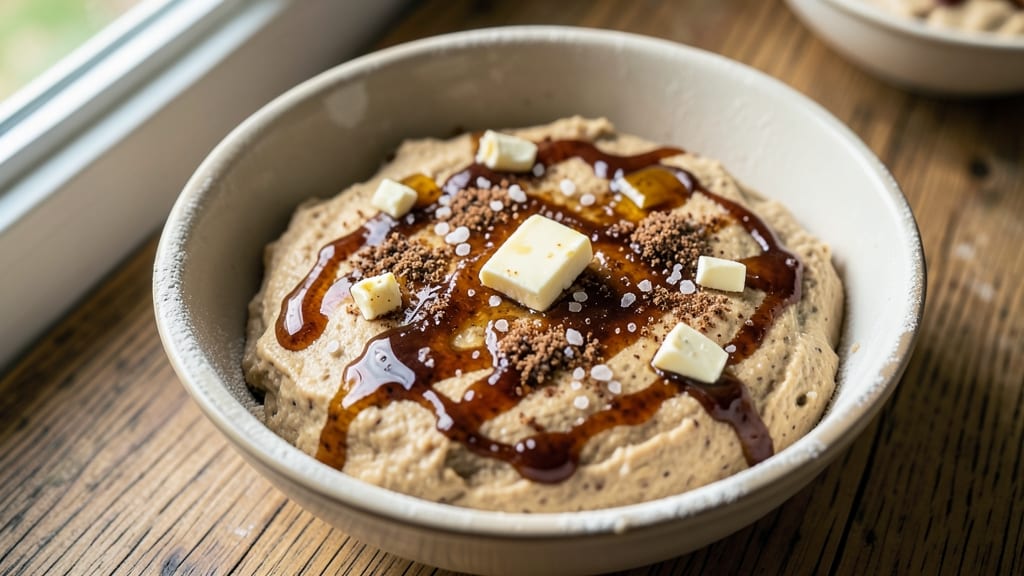
This authentic German rye bread recipe delivers the deep, nutty flavor and dense crumb structure of traditional Roggenbrot, crafted with precision and patience. The secret lies in balancing rye and wheat flour while developing a robust sourdough starter—or using commercial yeast for a more accessible approach.
I’ve perfected this method over years of baking, ensuring every loaf captures the hearty essence of German bakery traditions.
What sets this recipe apart is its focus on authenticity, from the precise flour ratios to the slow fermentation process that creates that signature tangy depth. The bread bakes in a Dutch oven for an even crust and ideal oven spring, resulting in a loaf that’s both rustic and refined.
Whether you’re making it for a holiday meal or everyday enjoyment, this bread brings a taste of Germany to your kitchen.
The final result is a loaf with a dark, crackly crust and a moist, slightly sweet crumb that’s perfect for sandwiches, dipping in butter, or serving alongside hearty stews. The nutty flavor comes from the rye flour, while the sourdough fermentation adds complexity that’s hard to replicate with shortcuts.
This is the kind of bread that makes your kitchen smell like a German bakery and leaves everyone asking for seconds.
For those seeking variations, you can adjust the rye-to-wheat ratio for a lighter or darker loaf, or even add seeds for extra texture. The recipe also includes troubleshooting tips to avoid common pitfalls like a dense crumb or pale crust.
Let’s get started on your journey to authentic German rye bread.
Ingredients for authentic german rye bread
Six ingredients make the difference between store-bought and bakery-style German rye bread.
| Ingredient | Amount | Notes |
|---|---|---|
| Rye Flour 🌾 | 3 cups | Dark rye for authentic flavor |
| All-Purpose Flour 🌾 | 1 ½ cups | For structure and lift |
| Active Dry Yeast 🍞 | ¼ oz | Or 2.25g for precision |
| Sourdough Starter 🍞 | 1 ½ cups | Active, bubbly starter |
| Dark Brown Sugar 🍬 | ½ cup | For caramelization |
| Honey 🍯 | ¼ cup | Wildflower preferred |
| Unsalted Butter 🧈 | ½ cup | Cold, cubed for texture |
| Warm Water 💧 | 1 ½ cups | 105°F for yeast activation |
| Salt 🧂 | 1 ½ tsp | Fine sea salt preferred |
| Molasses 🍯 | 1 tbsp | For depth and color |
| Sesame Seeds 🌻 | 2 tbsp | Optional for topping |
| Poppy Seeds 🌻 | 1 tbsp | Optional for topping |
The rye flour is non-negotiable for that signature nutty depth—King Arthur or Bob’s Red Mill are my go-tos, but any dark rye will work. The all-purpose flour balances the density, so don’t skip it. For the starter, if you’re using commercial yeast, Saf-Instant works best—it activates without proofing. The butter should be cold (like fridge-cold) so it creates pockets of flavor. I always grab European-style butter from Trader Joe’s for that extra richness. The honey? Wildflower has the most complex flavor, but any will do in a pinch.
No sourdough starter? Substitute with 1.5 cups buttermilk—it adds tang without the fuss. Short on rye flour? Swap half with whole wheat, but expect a slightly denser loaf. The molasses is key for color and depth—Grandma’s brand is a pantry staple. For the seeds, sesame and poppy are traditional, but sunflower or flaxseeds work too. The butter can be omitted if you’re dairy-free, but the bread will be less tender. And if you’re in a hurry, reduce fermentation time by 30 minutes, though flavor will be slightly less developed.
This dough needs time—at least 8 hours for fermentation, ideally overnight. Store the dough in a lightly oiled bowl covered with a damp towel in the fridge. The seeds keep for 6 months in an airtight container, while the flour should be used within 3 months of opening. The finished loaf stays fresh for 5-7 days wrapped in a cotton towel, or freeze slices for up to 3 months. I always make a double batch—one for the table, one for freezing.
Why You'll Love This Recipe
- No-Knead Magic: I swear by this dough—just mix, let it rise, and bake. The sourdough starter does all the heavy lifting while you sip coffee and scroll through your phone.
- Deep, Earthy Richness: That dark brown sugar and rye flour combo? It’s like biting into a warm hug—slightly sweet, hearty, and packed with that classic German bread flavor you can’t find anywhere else.
- Weeknight Workhorse: Between us, this bread is my go-to: toast it for breakfast, pack slices for sandwiches, or serve it with dinner. It’s the one loaf that actually gets eaten before it goes stale.
- Budget-Friendly Staple: Honestly, rye flour is cheaper than most specialty breads, and a single batch lasts me nearly a week. Plus, the sourdough starter means no expensive yeast packets—just a little culture that keeps giving.
Step-by-step instructions for authentic German rye bread
Here's how to craft a traditional German rye bread with deep sourdough flavor and satisfying chew.
Mix the Sourdough Dough
In a large mixing bowl, combine the 3 cups rye flour and 1.5 cups all-purpose flour. Create a well in the center and add the 1.5 cups sourdough starter, 0.5 cup dark brown sugar, 0.25 cup honey, 0.5 cup cold unsalted butter (cubed), 1.5 cups warm water (about 105°F), 1.5 tsp salt, and 1 tbsp molasses. The butter should remain mostly intact at this stage.
Using a wooden spoon or dough whisk, gradually mix the ingredients until you have a shaggy, sticky dough. The rye flour will make this dough particularly wet—don't be tempted to add more flour yet. Let the mixture rest for 10 minutes while you prepare your workspace. This initial rest helps the gluten begin to relax and the rye flour absorb moisture properly.
Develop the Dough Through Kneading
After the 10-minute rest, wet your hands and begin kneading the dough on a lightly floured surface. German rye bread dough is particularly sticky, so work quickly but gently. Knead for about 8-10 minutes until the dough becomes more elastic and begins to pull away from the sides of the bowl when tested.
You'll notice the dough is denser than wheat bread dough—this is normal. The high rye flour content makes it heavier and more moist. If the dough still feels too sticky after kneading, add 1-2 tablespoons of all-purpose flour, but try to keep it as close to the original recipe as possible for authentic texture.
First Fermentation
Shape the dough into a round loaf and place it back in the mixing bowl. Cover the bowl loosely with plastic wrap or a damp kitchen towel. Let the dough ferment at room temperature for 4-6 hours, or until it has nearly doubled in size. You'll know it's ready when you poke the dough gently and it springs back slowly, leaving a slight indentation.
This fermentation step is crucial for developing the deep, tangy flavor characteristic of German rye bread. The warm environment helps the sourdough starter activate fully. If your kitchen is particularly cold, you might need to extend this time to 8 hours. Avoid placing the dough in direct sunlight or near heat sources, as this can cause uneven fermentation.
Shape and Second Fermentation
Once the dough has fermented sufficiently, turn it out onto a lightly floured surface and shape it into a round loaf, about 8 inches in diameter. For an authentic German touch, you can create a slight depression in the center to form a small well. Place the shaped dough on a parchment-lined baking sheet and cover it again with plastic wrap or a damp towel.
Let the dough undergo a second, shorter fermentation for 1-2 hours at room temperature. This step allows the dough to rise slightly more and develop additional flavor. The dough should be noticeably puffier and feel springy when pressed gently. Preheat your oven to 375°F during this final rise, as you'll want to bake the bread immediately afterward.
Bake to Golden Perfection
Bake the rye bread in the preheated oven for 45-50 minutes, until the crust is deep golden brown and the internal temperature reaches 200°F. The bread should sound hollow when tapped on the bottom. If the top browns too quickly, tent the bread loosely with aluminum foil after 20 minutes to prevent over-browning.
For an extra touch, brush the top of the bread with a little water or milk before baking to encourage a crispier crust. Once baked, transfer the bread to a wire rack to cool completely. This cooling step is essential—it allows the bread to set properly and prevents a gummy texture. While cooling, prepare your toppings: mix the 2 tbsp sesame seeds and 1 tbsp poppy seeds in a small bowl.
Top and Serve
Once the bread has cooled completely, use a sharp serrated knife to slice it into 6 equal portions. Sprinkle each slice generously with the sesame and poppy seed mixture. The seeds add a delightful crunch and visual appeal that's characteristic of traditional German rye bread.
Serve the bread warm or at room temperature. The flavor will continue to develop over the next 24 hours, making it even more delicious as it sits. German rye bread is best enjoyed with butter, cheese, or as part of a hearty meal. Store any leftovers in an airtight container at room temperature for up to 3 days, or freeze for longer storage.
Pro Tips For Making Authentic German Rye Bread
- Hydrate the Rye First: Mix your rye flour with the liquid (water, milk, or whatever you’re using) at least 30 minutes before combining with the rest—it’s dense stuff and needs time to soften. I learned this the hard way when my first batch turned out gummy because the rye absorbed everything too late.
- Feed Your Starter Right: Your sourdough starter should be active and bubbly when you use it, not sluggish or flat. If it’s weak, feed it 1:1:1 (starter:flour:water) twice daily for 12 hours before baking—this guarantees it’ll punch up the flavor. (Yes, even if you’re impatient like me.)
- Don’t Over-Knead the Dough: Rye dough is fragile—overworking it makes it tough and chewy. Stop mixing once it just comes together into a shaggy mass, then let the gluten relax during the bulk ferment. I used to beat it like a punching bag, and the bread turned out like a brick.
- Steam the First 20 Minutes: Place a metal tray filled with boiling water in your oven before baking, then cover the loaf loosely with foil. This mimics a bakery’s steam injection and gives you that crackly, golden crust Germans swear by. (Skip this, and you’ll get a sad, dense top.)
Regional styles of this authentic german rye bread
Northern German Style
In Northern Germany, particularly in Hamburg and Schleswig-Holstein, rye bread tends to be lighter and slightly sweeter than its Southern counterparts. The key difference is the higher proportion of wheat flour (up to 50%) blended with rye, creating a softer crumb.
I’ve baked this variation by replacing 1 cup of rye flour with all-purpose flour while keeping the molasses at 2 tbsp for a subtle sweetness.
The dough ferments for 6-8 hours at room temperature, and I add 1 tbsp caraway seeds to the dough for that classic Northern German flavor. 🌾
Southern German (Bavarian) Approach
Bavarian rye bread, like the famous Pumpernickel, leans into 100% rye flour with a longer fermentation time of 12-24 hours in the fridge. For authenticity, I use whole-grain rye flour and reduce the honey to 1 tbsp to avoid over-sweetening.
The dough is shaped into a long oval loaf and baked at 350°F for 60-75 minutes until the crust is deep black. A splash of apple cider vinegar (1 tbsp) in the dough enhances the tang. This dense, almost cake-like bread is traditionally served with liverwurst or butter.
Berliner Roggenbrot
Berlin’s version of rye bread is crispier on the outside and softer inside, thanks to a double-steam method during baking.
After shaping the dough (using 75% rye, 25% wheat flour), I place it in a preheated Dutch oven with a steaming tray (or a bowl of boiling water) on the lower rack. Baking at 375°F for 40 minutes creates that signature crackly crust.
For extra flavor, I brush the baked loaf with melted butter and sprinkle coarse sea salt while still warm. This style pairs perfectly with Berliner currywurst.
Swabian Dark Rye
Swabia’s Schwarzbrot (black bread) is richer and nuttier, often incorporating malted rye flour or barley malt for depth. I substitute ½ cup of the rye flour with malted rye flour and add 1 tbsp blackstrap molasses for a deeper color and robust flavor.
The dough ferments overnight in the fridge for maximum tang, and I bake it in a cast-iron skillet for a rustic, hearth-like crust. This bread is traditionally served with lentil stews or sausages.
Modern German Variations
For a lighter, sandwich-friendly rye, I blend 60% rye and 40% whole wheat flour, adding 1 tbsp vital wheat gluten to improve structure. The dough ferments for 4 hours, and I bake it in a loaf pan at 350°F for 35 minutes.
This version is perfect for Reuben sandwiches or smoked fish platters. Another modern twist: seeded rye with sunflower, flax, and pumpkin seeds baked into the crust for extra crunch and nutrition. 💡
Nutrition facts
Frequently asked questions
Can I make this rye bread without a sourdough starter?
Yes! The recipe works perfectly with commercial yeast. Simply replace the 1.5 cups sourdough starter with 2.25g active dry yeast (about 1 packet) dissolved in the 1.5 cups warm water. The fermentation time will be shorter (3-4 hours total), but the flavor will still be rich and satisfying.
Why does my German rye bread turn out dense instead of crusty?
Dense rye bread usually means the dough didn't ferment long enough or the oven wasn't hot enough. For authentic texture, ensure the dough ferments for at least 4-6 hours (longer is better) and bake at 375°F until the internal temperature hits 200°F. Using a Dutch oven also helps create that signature crackly crust.
What’s the best way to store leftover rye bread?
Wrap cooled slices in a cotton towel and store in an airtight container at room temperature for 5-7 days. For longer storage, freeze slices for up to 3 months. The towel prevents drying while keeping the bread fresh. Reheat slices in a 350°F oven for 5 minutes to restore crispiness.
How do I adjust the recipe for a lighter, sandwich-style rye?
For a lighter crumb, reduce the rye flour to 2 cups and increase all-purpose flour to 2 cups. Add 1 tbsp vital wheat gluten for better structure, ferment for 4 hours, and bake in a loaf pan at 350°F for 35 minutes. This version works perfectly for Reuben sandwiches or smoked fish.
Can I substitute honey with another sweetener?
Yes! Replace honey with agave nectar or maple syrup (use a 1:1 ratio), but avoid corn syrup—it lacks the depth of flavor. For a vegan option, use date syrup. The sweetener helps balance the rye’s earthiness, so don’t skip it entirely.